Tag: wellness

  • Beginning the Year with Discernment and Compassion, Not Bypassing

    Beginning the Year with Discernment and Compassion, Not Bypassing

    There’s a common expectation to start the year with optimism. For me, though, a fresh start doesn’t require pretending everything is okay. I value honesty over toxic positivity, which means acknowledging what still needs my attention. I’m starting this year with compassion for the parts of me that carry past scars.

    Recently, wellness blogger Rohitash Yadav of Urban Wellbeing Tips’ content brought up old pain. It wasn’t just his dramatic delivery; it reminded me of a version of myself that was once deceived and betrayed. Love bombed. Recognizing this isn’t “sweating the small stuff.” It is acknowledging what was real.

    My trauma being triggered doesn’t excuse his behavior. A boundary violation is still a violation, and deception is still deception. The difference now is that I spot these patterns quickly. I canceled my subscription as soon as I noticed the warning signs.

    Others might view this as an overreaction. As part of my healing and self-inquiry process, I tuned inward and asked myself that. This isn’t an overreaction. For those of us with a history of betrayal, a breach of space isn’t a small thing—it’s a signal. Given how misunderstood trauma is, given how uninformed society is about trauma, our protective instincts are often dismissed.

    I’ve become highly aware of performative patterns: the use of sophisticated language to mask a lack of substance, inconsistent professional claims, and a focus on high-end branding over genuine transparency.  These are tactics that exploit a person’s desire for meaning and connection. I don’t judge those who follow him because I was once that vulnerable. That memory helps me stay understanding and compassionate while I focus on my own path.

    This situation also clarified memories of my deceased, manipulative, narcissistic mother. Decades of betrayal before I cut contact made me alert to signs of manipulation and deception. While the patterns are similar, I am grateful I can now tell the difference between then and now. I am giving myself the time and space to think clearly and process the hurt without judgment — for myself and others.

    And that is how I’m starting the year: integrating my experiences rather than pushing them awaywelcoming and honoring whatever is coming up for healing, release, and integration. I am prioritizing my autonomy over putting on a show. I am moving forward feeling lighter, with less distraction and more trust in myself and the Divine Intelligence.

    If this resonates, how do you honor yourself when old patterns resurface? If any part of this speaks to you, I invite you to share your reflections in the comment section below.

    Peace and Blessings,
    Thea 💙

    Update — as of 21 January 2026

    Rohitash Yadav of Urban Wellbeing Tips, the wellness blogger referenced in my December 29, 2025 reflection, titled, When My Clarity Doesn’t Need Permission has recently revised the “About” section of his platform. Phrases previously used to project a guru‑like authority — including “Sanctuary of Peace,” “embodies wellness in every word,” and “readers trusting him more than themselves” — have been removed. The writing approach is now framed as “coming from sincerity — not performance,” cited as the reason readers resonate with his work.

    Strategic Compliance
    Authentic writing needs no declaration of its authenticity; words rooted in Truth stand on their own. Non‑performative communication does not require an announcement of its nature.

    The Pattern
    Whether this shift followed the identification of these patterns in my December 29, 2025 piece and the succeeding pieces, including this one, that documented the arc is for readers to discern. This note is shared for the record — not for the blogger, but to safeguard the credibility of this sanctuary and uphold the standards that guide it.

    Integrity of the Hearth
    By documenting these shifts and linking back to the original reflection, the lineage of events remains transparent. This ensures that the “Human Signature” of this space stays intact and that performative mimicry is recognized as such, especially when violations occur.


  • The Gift of Not Belonging: My New Year Threshold

    The Gift of Not Belonging: My New Year Threshold

    As we step into the first light of a new year, many of us reflect on where we’ve been—and where we think we should be. For me, that reflection has long centered on a single question: Where do I belong?

    But after six decades of searching, I’ve learned that the answer wasn’t about finding a place or group to fit into—it was about recognizing that my “misalignment” with the world around me isn’t a flaw. It’s a gift.

    Last night, the fireworks outside mirrored the clarity within — sovereignty illuminated at the year’s edge.

    From the very beginning, the first message I received from the world was rejection. My birth parents—and eventually siblings and other relations—turned away because of the color of my skin, my gender, and how I looked as a newborn.

    I was ridiculed. “Negrita of the mountain!” “Igorota!” (a female member of a northern tribe in the Philippines) were constantly hurled in my direction. Silence was the only response I knew.

    I pursued it everywhere: within my family of origin, in friendships, in community organizations, and even in the vision of a home by the sea or in the countryside. Enchanted by romantic verses, rustic dreams, folklore, and the modern cottagecore vibe, I thought happiness and fulfillment could be found in withdrawing to a charming bahay kubo (nipa hut) where everything would ultimately “come together” and “fall into place.” Yet the search acted as a diversion, leading me into misguided decisions influenced more by longing than by reality.

    This misalignment feels particularly sharp in the Philippines, where cultural values are rooted in kapwa (shared identity) and collectivism. Community, family, and harmony often take priority over individual needs—and speaking up, asserting my views, or setting firm boundaries earned me labels I heard again and again: mataray, difficult, too strong-willed, too much, uncooperative.

    I attempted to diminish myself, to conform to the expected role of womanhood, or how women are supposed to act in Filipino society, especially if I wished to maintain my social circle—putting others before me, suppressing my views, valuing the group’s harmony over my own truth. Yet every concession made me feel empty, as though I were diminishing to fit into a place I was never intended to inhabit.

    In June 2025, a fractured ankle sealed the first lesson. Forced to stop, I stepped away from the condo governance community saga that had drained me for several years—where my efforts to advocate for transparency were dismissed as being “too pushy” or having too high standards. A perfectionist in an imperfect world.

    Offering my time and skills as an unpaid committee volunteer to improve our building’s management was misinterpreted by community members as pro‑Board. They failed and refused to see—even appreciate—that my efforts were aimed at improving our entire community’s living situation.

    That rupture was more than physical—it was ceremonial. It showed me how deeply my rescuer reflex was tied to an unmet childhood need for approval, and how much of my life had been driven by trying to prove I deserved to belong.

    In November 2025, a trip to Los Baños, Laguna, shattered the last of my illusions. Standing in a place I’d once imagined as my “cottage sanctuary,” I saw clearly how the myth of belonging had kept me from my truest self. A sudden confrontation with the divide between the myth and the reality of that idealized life shattered the illusion completely.

    I finally understood: There is nothing fundamentally wrong with me. I am simply different. An outsider.

    I have always identified as an extroverted introvert, but learning about the “otrovert” in Rami Kaminski’s The Gift of Not Belonging: How Outsiders Thrive in a World of Joiners, gave me language for what I’ve lived all along. Otroverts thrive not by joining, but by standing apart—creating, discerning, and contributing from the margins.

    I know labels can become cages, reducing complexity to shorthand. But for me, this framework is about sense‑making—not diagnosis. It helps me depersonalize what I’ve carried, broaden my understanding of how identity and culture intersect, and cultivate compassion for both myself and the world I navigate.

    This awareness is my doorway into cronehood. I look forward to spending my sunset years not in pursuit of fleeting belonging, but in lasting peace and quiet joy. I leave behind false teachings, misaligned choices, and unhealthy patterns—rescuing, compulsiveness, martyrdom—that shaped my past decades.

    The rescuer, the self‑doubter, the validation‑seeker — all sent off with one‑way, non‑refundable tickets to Pluto.

    My new year begins here: not in escape, not in external community, but in the sanctuary of myself.

    And when I hear “This Is Me” from The Greatest Showman, I recognize my own declaration:

    In future posts, I’ll explore how the rescuer’s trap, compulsiveness, and martyrdom hooks all tie back to this gift of not belonging.

    I step into the new year with gratitude for discernment, clarity, and the spiral of healing — carrying less noise and more trust.

    As we step into the new year, please allow yourself a moment to reflect:
    Where have I been shrinking to fit in?
    Have you been chasing belonging in places or groups that don’t honor who you are?
    Have cultural expectations or family norms made you feel like you’re “too much”—or not enough?

    If any part of this speaks to you, I invite you to share your reflections in the comment section below.

    Wishing everyone joy, health, and fresh beginnings! Happy New Year!!!

    Peace and Blessings,
    Thea 💙

  • The Weight of the Mask: Reclaiming My Clarity

    The Weight of the Mask: Reclaiming My Clarity

    For years, I looked for guidance in spaces where “care” felt more like a stage production than a conversation. I sat in rooms where authority was worn as an appearance of compassion, used to avoid the messy work of accountability.

    I remember the sting of being told my clarity was resistance. When I named harm or asked for transparency, the response was not “I hear you.” It was calm superiority, passed off as wisdom, but used to silence.

    I saw this pattern clearly in a so‑called “safe space” offered by a trauma recovery foundation.

    What was meant to be private and supportive became a venue for unchecked trauma dumping. When I raised my concern, the response was not accountability but deflection. I was told the team would “look into it,” even though I had written directly to the executive director’s corporate email. When I pressed further, the defense was that they had “few volunteers” and wanted to encourage survivors to speak, since they had been silenced all their lives.

    But what about those of us on the sidelines, listening and absorbing the raw dumping without protection? Emotional safety was promised, yet not ensured. And these were paying members-trauma survivors! If the excuse is “we don’t have enough volunteers,” then perhaps such spaces should not be offered at all.

    More recently, I encountered this pattern again when I named a boundary violation in my own space. In my previous post, No One Puts Baby in the Corner: Discernment & Boundaries in Blogging Spaces, I wrote about how certain words — even polished ones — can feel hollow, how self‑promotion can masquerade as connection.

    To test my own clarity, I asked a website coach to give professional feedback on the About section I had flagged. Without knowing my story, they named the same traits I had already named: self‑promotion dressed as care, credentials stacked for show, and even claims that readers should trust the figure more than themselves. They warned how such framing risks dependency and undermines self‑trust.

    Not long after, I saw those very terms I used to describe the pattern being co‑opted to defend the behavior itself.

    I’ll admit — I was amused more than anything else. No sting, no trigger — just a quiet recognition that my words had landed, even if they were being reframed to serve someone else’s image. They wouldn’t be an echo chamber if they didn’t echo, after all! It was a strange but powerful kind of validation: the pattern I’d named was so clear it had become part of the conversation, even if the messenger was being defended against.

    In seeing my words echoed back, I was reminded that the pattern itself is larger than any one person — it shows up wherever authority hides behind calmness to avoid accountability.

    The excuses fell apart, one after another. I saw effort used as avoidance and dismissals passed off as wisdom. I realized that the calm projected wasn’t peace — it was a shield to deflect responsibility.

    In processing this, I’ve learned that clarity does not need permission. It does not need to be validated by someone with a title or a following. It is not a secret gift reserved for a select few or the “enlightened.” And when our insights are seen and even borrowed, it is not a reason to engage — it is a sign that our truth has cut through the performance.

    I no longer bend myself into shapes to soothe the pride of self‑proclaimed masters. I no longer accept “care” that requires me to doubt my own eyes. I trust my own reality, unperformed and unmasked.

    • Have you experienced “care” that felt more like performance than accountability? Where?
    • How do you recognize when your clarity is being reframed as resistance?
    • What does it look like, for you, to trust your own reality unperformed and unmasked?

    If any part of this speaks to you, I invite you to share your reflections in the comment section below.

    Peace and Blessings,
    Thea 💙

    Update — as of 21 January 2026

    The wellness blogger referenced in my December 29, 2025 reflection, titled, When My Clarity Doesn’t Need Permission has recently revised the “About” section of his platform. Phrases previously used to project a guru‑like authority — including “Sanctuary of Peace,” “embodies wellness in every word,” and “readers trusting him more than themselves” — have been removed. The writing approach is now framed as “coming from sincerity — not performance,” cited as the reason readers resonate with his work.

    Strategic Compliance
    Authentic writing needs no declaration of its authenticity; words rooted in Truth stand on their own. Non‑performative communication does not require an announcement of its nature.

    The Pattern
    Whether this shift followed the identification of these patterns in my December 29, 2025 piece and the succeeding pieces, including this one, that documented the arc is for readers to discern. This note is shared for the record — not for the blogger, but to safeguard the credibility of this sanctuary and uphold the standards that guide it.

    Integrity of the Hearth
    By documenting these shifts and linking back to the original reflection, the lineage of events remains transparent. This ensures that the “Human Signature” of this space stays intact and that performative mimicry is recognized as such, especially when violations occur.
  • No One Puts Baby in the Corner: Discernment & Boundaries in Blogging Spaces

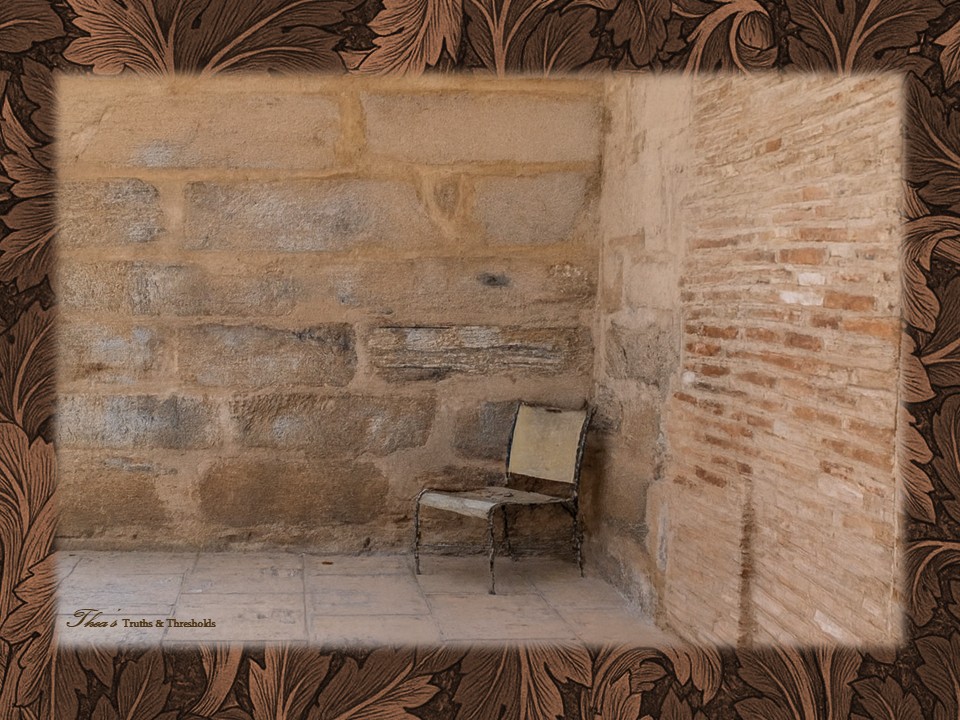
    No One Puts Baby in the Corner: Discernment & Boundaries in Blogging Spaces

    There are responses that look polished, grammatically correct, even “perfect.” They use all the right words, the right tone, the right gestures of care. But for those of us with heightened sensitivity, discernment, and well‑developed pattern recognition, something feels off. We can sense when words are empty vessels. We can tell when care is performed rather than embodied.

    That was the case with an earlier encounter I had with a wellness blogger, Rohitash Yadav of Urban Wellbeing Tips, who claimed authority but failed to practice his ethical responsibility as a journalist. He didn’t fact‑check. He didn’t think through his response. He even linked to an unrelated post — all driven by ego and self‑promotion. On the surface, it looked like he respected my boundaries. In truth, it was face‑saving performance, optics for branding and monetization.

    In a previous post about the boundary violation in online interaction, When Clarity Doesn’t Need Permission,I talked about protecting my authenticity and space. That earlier reflection laid the groundwork for this one.

    If Rohitash were a non‑journalist, a non‑writer, an ordinary individual without any writing background, I would have let it go. I would have charged it to lack of communication skills or expertise — not everyone is trained to connect dots. That would have been not sweating the small stuff.

    But because he claimed the mantle of journalist, the disconnect mattered. Journalists are expected to think, to contextualize, to honor coherence. He didn’t. He defaulted to autopilot — branding, self‑promotion, performance. And that is why discernment demanded a boundary.

    I chose not to approve his latest comment — his attempt at crafting a supposed thoughtful response to my boundary assertion. Why? Because the words were hollow and insincere. Sure, they were the “correct” words to say when being called out — but they carried no soul.

    He simply mirrored my boundary, even repeating the exact words I used. And when words lack authenticity, when they are uttered only as a face‑saving attempt, without any genuine apology, they do not deserve further airtime in my space — a space he had already intruded upon.

    This is typical of social media culture.

    You ask permission, and you wait for permission to be granted before leaving anything behind — even in public places. And when you call yourself a wellness expert‑journalist, you pause. You ask yourself if your comment truly adds value to the conversation, or if it is merely noise.

    I would have preferred that he added something like, “I hope it’s okay that I share the link to my post, which talks about the inner child and playfulness…” or “May I invite you to my post about the inner child and playfulness…” The absence of these words revealed a lack of respect for someone else’s space.

    Rohitash had every right to share and promote his posts on his own site. But to do that in another’s space is crossing a line — a boundary violation. He should have stayed in his lane instead of using someone else’s platform to promote his brand. Even more so when what he shared was unrelated to the piece he was commenting on and linking to.

    It became clear to me that he wasn’t after genuine connection. He was after self-promotion and brand visibility. That is why I chose not to approve his response‑comment and blocked him from commenting altogether.

    He even had the audacity to claim that his readers trust him more than they trust themselves — and he took pride in it. That statement reveals the deeper danger:

    Systems like the Catholic Church, among others, have long propagated this model, instilling dependency on priests, doctrines, and intermediaries instead of empowering members to listen to the Wise One Within. Even the teachings of Master Jesus have been distorted. “I am the Truth, the Way, and the Life. No one comes to the Father except through me. (John 14:6)” was never meant to demand literal mediation through him. It was an invitation to awaken the Christ Within, to recognize that the path is already inside us.

    I ran my interpretation by a friend.* Their reaction was the familiar refrain: “You’re reading too much into it. You’re over‑analyzing.”

    Many people are socialized to prioritize politeness over intuition, to smooth over discomfort rather than name it. In Filipino culture, this often takes the form of hiya (shame) and pakikisama (get along with others) — values that emphasize avoiding shame and maintaining harmony, even at the cost of clarity. These cultural shields can make discernment look like disruption, when in truth it is protection.

    And because of that discernment, I chose not to approve his comment. I blocked him from further airtime. That was boundary enforcement in practice — protecting my sanctuary from intrusion disguised as care.

    This is the paradox: the majority misperceive sensitivity as weakness, as “too much.” But in truth, it is strength. A shield. A compass. It is the ceremony of clarity.

    To my fellow sensitive, discerning readers: you are not alone. Our gifts are not flaws. They are the very tools that protect and guide us.

    In the end, this is not about confrontation. It is about curation. It is about choosing clarity over optics, presence over performance. It is about honoring the integrity of our spaces and the signals of our own bodies.

    If any part of this speaks to you, I invite you to share your reflections in the comment section below.

    Peace and Blessings,
    Thea 💙


    *Update – 31 December 2025

    At first, I teased my friend: “Maybe you defended the wellness blogger because you share the same DNA!” Ironically, this was the same friend who once pointed out that pattern recognition is one of my strengths — a gift I hardly noticed because it felt second nature. When I finally embraced it, used it, and presented my findings, he dismissed me. But with my determination, and when he finally saw and connected the dots, he conceded.

    My discernment was right all along. Sensitivity, once again, proved itself as shield and ceremony — even in the House of Optics.

    Update — as of 21 January 2026

    The wellness blogger, Rohitash Yadav of Urban Wellbeing Tips, referenced in my December 29, 2025 reflection, titled, When My Clarity Doesn’t Need Permission has recently revised the “About” section of his platform. Phrases previously used to project a guru‑like authority — including “Sanctuary of Peace,” “embodies wellness in every word,” and “readers trusting him more than themselves” — have been removed. The writing approach is now framed as “coming from sincerity — not performance,” cited as the reason readers resonate with his work.

    Strategic Compliance
    Authentic writing needs no declaration of its authenticity; words rooted in Truth stand on their own. Non‑performative communication does not require an announcement of its nature.

    The Pattern
    Whether this shift followed the identification of these patterns in my December 29, 2025 piece and the succeeding pieces, including this one, that documented the arc is for readers to discern. This note is shared for the record — not for the blogger, but to safeguard the credibility of this sanctuary and uphold the standards that guide it.

    Integrity of the Hearth
    By documenting these shifts and linking back to the original reflection, the lineage of events remains transparent. This ensures that the “Human Signature” of this space stays intact and that performative mimicry is recognized as such, especially when violations occur.