Tag: outsider identity

  • When You’re the Afterthought: Family Estrangement, Public Stories, and Finding Our People in the Philippines

    When You’re the Afterthought: Family Estrangement, Public Stories, and Finding Our People in the Philippines

    I came across the article about David Beckham leaving his son, Brooklyn, out of his 2025 year-end recap post, only to share throwback photos of him hours later. When Brooklyn was left out of his father’s recap, only added later, it reminded me of what it feels like to be remembered as an afterthought because that’s how his message came across to me. Maybe even for optics. If he wanted to honor all his kids, he would have included Brooklyn from the start.

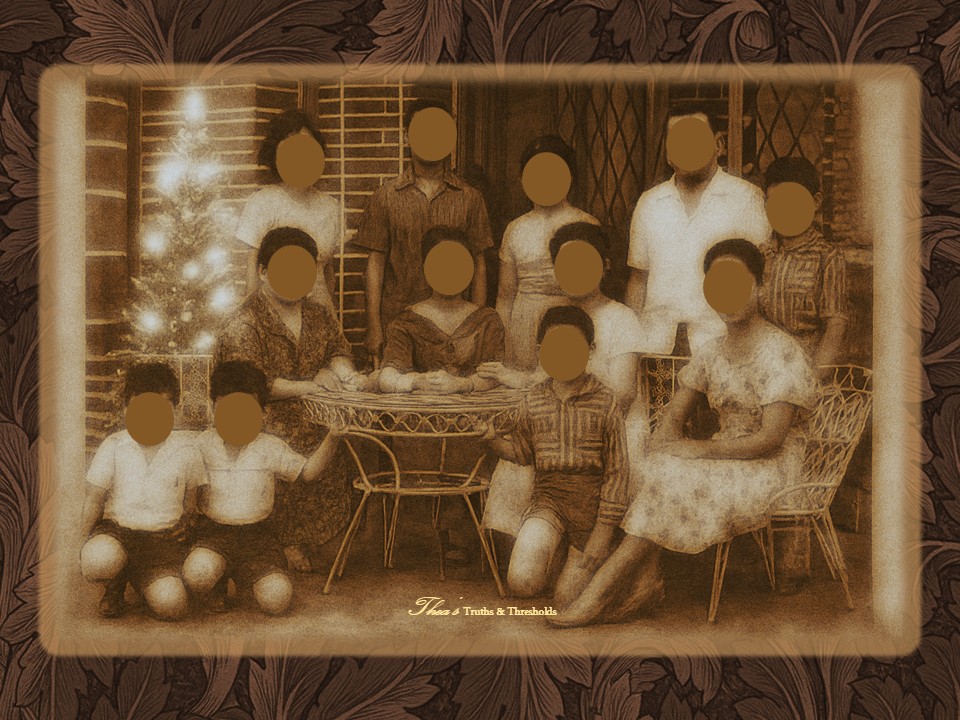
    This hit close to home because I know what it feels like to be the one who gets left out or remembered only as an afterthought—if I would even be remembered or included. For years, “echa pwera (to be excluded)” was a recurring theme in my life with my family of origin.

    I know I’m not the only one navigating this. Looking at public figures helps me remember and reassures me I’m not alone.

    I cheered on when Prince Harry and Meghan Markle stepped away from the royal family because of deep-seated issues—racism, lack of support for their mental health, and pressure to maintain an image over their well-being. They chose to prioritize their own family and healing, even when it meant letting go of traditional ties.

    Here in the Philippines, we saw the same with celebrity Sarah Geronimo. She didn’t invite her mother to her wedding, and while some criticized her, many more supported her choice. It was a big moment because it showed our culture is slowly starting to understand that “family first” doesn’t mean staying in harmful, abusive, and traumatizing situations.

    And as for me, I didn’t decide to step back from my birth family on a whim. I started distancing myself from my siblings when I was in my mid-40s, and from my mother a few years later. I’m now in my 60s. My father passed away several years ago. After our parents’ separation, my siblings and I had been estranged from him, too, for a long time—his choice, not mine.

    I was the one who spoke up about things that needed to change. The truth teller. The cycle breaker who tried to break harmful patterns that had been going on all throughout my childhood and adult life, even for generations. It wasn’t easy, especially in a culture where “utang na loob (debt of gratitude)” is often used to pressure us into staying quiet or putting up with things we shouldn’t. But I knew I couldn’t keep sacrificing my own mental and emotional health.

    Healing takes time, and it helps to know we’re not the only one on this path. Our well-being matters, and our journey is valid—whatever that looks like for us.

    I find it encouraging to come across recent articles that signal a cultural shift in the Philippines — a willingness to speak more openly about the once-taboo topic of family estrangement and the choice to go no contact:

    I’m glad not only to see the topic being discussed more openly, but also to see resources becoming accessible for those navigating such a difficult path. When I was contemplating this decision decades ago, there were hardly any materials to turn to.

    A few years back, I considered starting a support group. For now, my focus is on my own journey. Still, I want to offer a space for connection if you feel the need — a place to share reflections or simply be heard.

    I write under a pseudonym to protect my privacy, and I take confidentiality seriously. If you are or you know someone navigating family estrangement or struggling to set healthy boundaries, and you’d like to talk to someone who understands the cultural context we’re in—you may email me at theasjournal25@gmail.com  

    There’s no pressure to share more than you’re comfortable with. You may also share your reflections in the comment section below—whatever feels right and safe to you.

    Peace and Blessings,
    Thea 💙

  • The Gift of Not Belonging: My New Year Threshold

    The Gift of Not Belonging: My New Year Threshold

    As we step into the first light of a new year, many of us reflect on where we’ve been—and where we think we should be. For me, that reflection has long centered on a single question: Where do I belong?

    But after six decades of searching, I’ve learned that the answer wasn’t about finding a place or group to fit into—it was about recognizing that my “misalignment” with the world around me isn’t a flaw. It’s a gift.

    Last night, the fireworks outside mirrored the clarity within — sovereignty illuminated at the year’s edge.

    From the very beginning, the first message I received from the world was rejection. My birth parents—and eventually siblings and other relations—turned away because of the color of my skin, my gender, and how I looked as a newborn.

    I was ridiculed. “Negrita of the mountain!” “Igorota!” (a female member of a northern tribe in the Philippines) were constantly hurled in my direction. Silence was the only response I knew.

    I pursued it everywhere: within my family of origin, in friendships, in community organizations, and even in the vision of a home by the sea or in the countryside. Enchanted by romantic verses, rustic dreams, folklore, and the modern cottagecore vibe, I thought happiness and fulfillment could be found in withdrawing to a charming bahay kubo (nipa hut) where everything would ultimately “come together” and “fall into place.” Yet the search acted as a diversion, leading me into misguided decisions influenced more by longing than by reality.

    This misalignment feels particularly sharp in the Philippines, where cultural values are rooted in kapwa (shared identity) and collectivism. Community, family, and harmony often take priority over individual needs—and speaking up, asserting my views, or setting firm boundaries earned me labels I heard again and again: mataray, difficult, too strong-willed, too much, uncooperative.

    I attempted to diminish myself, to conform to the expected role of womanhood, or how women are supposed to act in Filipino society, especially if I wished to maintain my social circle—putting others before me, suppressing my views, valuing the group’s harmony over my own truth. Yet every concession made me feel empty, as though I were diminishing to fit into a place I was never intended to inhabit.

    In June 2025, a fractured ankle sealed the first lesson. Forced to stop, I stepped away from the condo governance community saga that had drained me for several years—where my efforts to advocate for transparency were dismissed as being “too pushy” or having too high standards. A perfectionist in an imperfect world.

    Offering my time and skills as an unpaid committee volunteer to improve our building’s management was misinterpreted by community members as pro‑Board. They failed and refused to see—even appreciate—that my efforts were aimed at improving our entire community’s living situation.

    That rupture was more than physical—it was ceremonial. It showed me how deeply my rescuer reflex was tied to an unmet childhood need for approval, and how much of my life had been driven by trying to prove I deserved to belong.

    In November 2025, a trip to Los Baños, Laguna, shattered the last of my illusions. I wrote about it in The Los Baños Threshold: The Mirage of the Cottage Sanctuary. Standing in a place I’d once imagined as my “cottage sanctuary,” I saw clearly how the myth of belonging had kept me from my truest self. A sudden confrontation with the divide between the myth and the reality of that idealized life shattered the illusion completely.

    I finally understood: There is nothing fundamentally wrong with me. I am simply different. An outsider.

    I have always identified as an extroverted introvert, but learning about the “otrovert” in Rami Kaminski’s The Gift of Not Belonging: How Outsiders Thrive in a World of Joiners, gave me language for what I’ve lived all along. Otroverts thrive not by joining, but by standing apart—creating, discerning, and contributing from the margins.

    I know labels can become cages, reducing complexity to shorthand. But for me, this framework is about sense‑making—not diagnosis. It helps me depersonalize what I’ve carried, broaden my understanding of how identity and culture intersect, and cultivate compassion for both myself and the world I navigate.

    This awareness is my doorway into cronehood. I look forward to spending my sunset years not in pursuit of fleeting belonging, but in lasting peace and quiet joy. I leave behind false teachings, misaligned choices, and unhealthy patterns—rescuing, compulsiveness, martyrdom—that shaped my past decades.

    The rescuer, the self‑doubter, the validation‑seeker — all sent off with one‑way, non‑refundable tickets to Pluto.

    My new year begins here: not in escape, not in external community, but in the sanctuary of myself.

    And when I hear “This Is Me” from The Greatest Showman, I recognize my own declaration:

    In future posts, I’ll explore how the rescuer’s trap, compulsiveness, and martyrdom hooks all tie back to this gift of not belonging.

    I step into the new year with gratitude for discernment, clarity, and the spiral of healing — carrying less noise and more trust.

    As we step into the new year, please allow yourself a moment to reflect:
    Where have I been shrinking to fit in?
    Have you been chasing belonging in places or groups that don’t honor who you are?
    Have cultural expectations or family norms made you feel like you’re “too much”—or not enough?

    If any part of this speaks to you, I invite you to share your reflections in the comment section below.

    Wishing everyone joy, health, and fresh beginnings! Happy New Year!!!

    Peace and Blessings,
    Thea 💙