I came across the article about David Beckham leaving his son, Brooklyn, out of his 2025 year-end recap post, only to share throwback photos of him hours later. When Brooklyn was left out of his father’s recap, only added later, it reminded me of what it feels like to be remembered as an afterthought because that’s how his message came across to me. Maybe even for optics. If he wanted to honor all his kids, he would have included Brooklyn from the start.
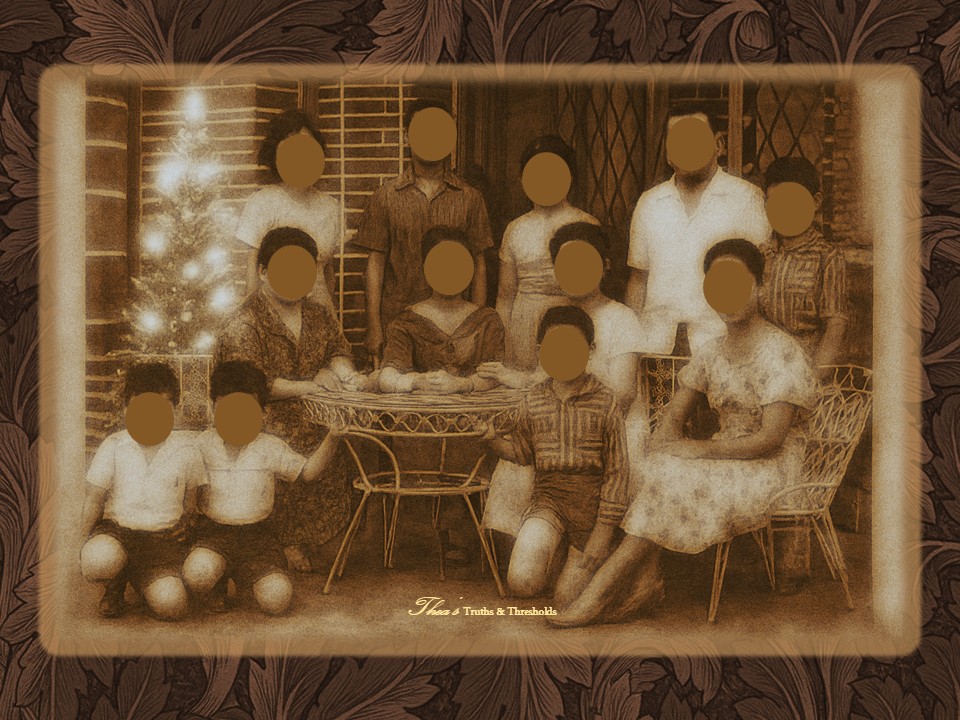
This hit close to home because I know what it feels like to be the one who gets left out or remembered only as an afterthought—if I would even be remembered or included. For years, “echa pwera (to be excluded)” was a recurring theme in my life with my family of origin.
*****
I know I’m not the only one navigating this. Looking at public figures helps me remember and reassures me I’m not alone.
I cheered on when Prince Harry and Meghan Markle stepped away from the royal family because of deep-seated issues—racism, lack of support for their mental health, and pressure to maintain an image over their well-being. They chose to prioritize their own family and healing, even when it meant letting go of traditional ties.
Here in the Philippines, we saw the same with celebrity Sarah Geronimo. She didn’t invite her mother to her wedding, and while some criticized her, many more supported her choice. It was a big moment because it showed our culture is slowly starting to understand that “family first” doesn’t mean staying in harmful, abusive, and traumatizing situations.
And as for me, I didn’t decide to step back from my birth family on a whim. I started distancing myself from my siblings when I was in my mid-40s, and from my mother a few years later. I’m now in my 60s. My father passed away several years ago. After our parents’ separation, my siblings and I had been estranged from him, too, for a long time—his choice, not mine.
I was the one who spoke up about things that needed to change. The truth teller. The cycle breaker who tried to break harmful patterns that had been going on all throughout my childhood and adult life, even for generations. It wasn’t easy, especially in a culture where “utang na loob (debt of gratitude)” is often used to pressure us into staying quiet or putting up with things we shouldn’t. But I knew I couldn’t keep sacrificing my own mental and emotional health.
*****
No one chooses to walk away from their family without a good reason. It’s a decision that usually comes after years of trying to make things work.
*****
I know there are others here in the Philippines who are going through the same thing, or something similar. Maybe you’re the one who had to set boundaries, or perhaps you’re the one who was pushed away. Either way, it can feel incredibly lonely.
Healing takes time, and it helps to know we’re not the only one on this path. Our well-being matters, and our journey is valid—whatever that looks like for us.
I find it encouraging to come across recent articles that signal a cultural shift in the Philippines — a willingness to speak more openly about the once-taboo topic of family estrangement and the choice to go no contact:
Looking for respondents for research on Filipino adult children estranged from their parents
Filipino & estranged from your family? Especially this [holiday] season?
Addressing Toxic Behaviors in Filipino Families | #YourMindOurMovement
I’m glad not only to see the topic being discussed more openly, but also to see resources becoming accessible for those navigating such a difficult path. When I was contemplating this decision decades ago, there were hardly any materials to turn to.
Even if we’ve been treated as afterthoughts or misjudged for prioritizing our mental health and well-being, we can choose to center our own healing.
Peace and Blessings,
— Thea 💙
 Thea's Truths & Thresholds