For sixty years, you’ve looked for a place where you were allowed to just be. For a long time, you waited for someone else to build that home for you—to tell you that you were right, that you were enough, and that your voice mattered.
Today, you are building that home for yourself.
I want to remind you why you are putting your truths on these pages. It isn’t to audition for anyone’s approval. It isn’t to finally be “good enough” for a mother or a family member. It is because your thoughts have lived in the dark for too long, and they deserve to breathe.
Remember the intention: Express, Not Impress.
When you sit down to write, do it to untangle the knots in your mind. If you feel a “release” in your chest when you hit publish, you’ve already won. You aren’t here to perform or to prove your worth. You are here to be a witness to your own life. Once a post is live, consider it “consecrated”—you’ve moved the weight out of your head and into this safe room. The work is finished the moment you click the button.
When the silence feels heavy, remember the “Shield.” There will be days when the old external-validation seeker in you wakes up and looks for a “like” or a comment to feel validated. When that happens, tell her these things:
Future Thea is your primary reader.You are documenting your evolution so she can look back years from now and see exactly how far you’ve come.
The Silent Readers are there. Remember the “90-9-1 Rule” of the internet: 90% of people read in silence without ever interacting, 9% interact occasionally, and only 1% ever actively post or comment. Just because the screen is quiet doesn’t mean your words didn’t provide a sanctuary for someone else at 2:00 AM.
Input is the only thing you control. Your healing happened in the writing, not the reading. Protect your peace.
After you share something vulnerable, walk away. Practice your 24-hour rule. Make a cup of tea, go for a walk, and remind your body that you are safe. You have rescued yourself by giving your truth a place to live. You don’t need a verdict from the world on your reality anymore.
Consecrated, in Sanctuary, Wise One Within
To anyone who happens to find this letter: welcome to Thea’s Truths & Thresholds. I’ve learned that the best way I can honor you is to stay honest with myself first. My hope is that by finding my own clarity, I might help you find yours, too. But if these words stay here in the quiet, that’s okay, too.
This is my sanctuary. And in this sanctuary, I am finally home.
(Archive Note: Some pieces on this site discuss wellness blogger Rohitash Yadav of Urban Wellbeing Tips’ violation—including documented mimicry and uncredited work. Ongoing updates about that situation are archived in When My Clarity Doesn’t Need Permission.)
A Note on a New Direction:
I launched Thea’s Truths & Thresholds back in early December 2025—tentatively at first, trying to find the right way to share what sixty years of living had taught me about clarity, belonging, and building spaces that feel like home. Today, 13 January 2026, I published A Letter to Thea from the Wise One Within—and in writing it, I finally gained clarity on what this space was always meant to be.
Starting today, I’m letting this blog take a more personal shape. I’ll be writing letters to myself and holding dialogues with the different voices that live within me—the frustrated part, the grounded part, the one that sees the bigger picture, and other parts of myself. Traditional reflections will still find their way here when they need to be shared, but this deeper, more intimate path is what calls to me now. It’s the only way to keep building this sanctuary with honesty and heart.
I’ve written before about not sweating the small stuff. About discernment. About boundaries, triggers, and knowing when to lean in and when to walk away.
And here I am, writing about them all over again.
Not because I’ve run out of ideas—but because this is what my life revolves around now. Discernment isn’t a class I aced and moved on from. It’s a practice I keep coming back to, again and again, because life just keeps throwing new stuff my way.
Triggers don’t vanish. Healing doesn’t wrap up neatly with a bow. What does change is how I show up when things pop off.
When the Body Speaks First After A Trigger
There will always be something—or someone—that sets me off.
That doesn’t mean I’m backsliding. It doesn’t mean I’ve failed at healing. It just means I’m human, with a nervous system built from years of history, experience, and doing whatever I needed to survive.
When a trigger hits, I don’t jump straight into deciding whether it’s “small stuff” or not anymore. That call comes later.
First, I turn inward.
I notice the chaos in my system. I listen to whichever part of me has come to the surface—sometimes it’s the part that’s felt betrayed, sometimes the hyper-vigilant one, sometimes a younger version shaped by how things used to be. I give her room to breathe. I let her say what she needs to say. I ground myself, take deep breaths, go for a walk, stretch it out, write it down. I stay right there with myself until I feel centered again.
Only then do I figure out what to do next.
Because trying to discern anything while my nervous system’s firing on all cylinders isn’t really discernment—it’s just reacting, or shoving stuff down and calling it maturity.
Being triggered doesn’t automatically mean something matters deeply. But it also doesn’t mean it should be brushed off.
That difference is everything.
Refusing the Bypass — The Trap of “Just Letting Go”
We live in a world that mixes up letting go with being healed.
“Just let it go.” “Choose peace.” “Don’t give it energy.” “Be the bigger person.” “If you’re still affected, you haven’t healed.”
This kind of advice can sound soothing, but for those of us with trauma histories, it often ends up being another way to gaslight ourselves. It asks us to ignore what we feel rather than listen to it. It makes sensitivity seem like weakness, and setting boundaries like we’re just being difficult.
This “bypass culture” treats discomfort like we’re doing something wrong—instead of seeing it as information.
Discernment asks a different question entirely: What do I actually need here? Do I need to care for myself around this? Let it go? Or create some distance?
Letting go can be wise. But it can also be premature.
There’s a huge difference between releasing something because it really is small—and letting it slide because we’ve been taught to make ourselves smaller.
The Limits of Self-Help
I’ve also noticed how some self-help practices—even those that sound kind and caring—can quietly hurt us all over again.
There’s this practice I keep seeing shared. It suggests saying something like, “I forgive the part of me that’s still attached to the person who hurt me.” I get why it exists. The idea is to shift our focus away from the person who caused the harm and back to ourselves—to take our power back instead of getting stuck in blame.
That intention is understandable.
But in practice? It can cross a line without anyone meaning it to.
In trauma-informed work, the word “forgive” can make it sound like we did something wrong. Like the part of us that’s still hurting, still holding on, still feeling the impact is somehow behind the times, or mistaken, or needs to be fixed. Without trying to, it can move the focus from what was done to us—onto us for still being affected.
It’s polite, well-meaning… but it can border on victim-blaming or shaming ourselves.
Being attached to someone who mattered—even someone who hurt us—isn’t a failure. Being affected by harm isn’t a moral flaw. Our nervous system doesn’t need to be forgiven for responding to what’s real.
In my own life, I’ve learned that what actually helps isn’t pardoning that part of me—it’s standing right beside her. Acknowledging that she’s reacting to something that truly happened. That what was done was wrong. And that while I can’t control the person who hurt me or undo the past, I can choose—when I’m ready, no rush—to find my way back to feeling steady again. No pressure, no self-judgment, no skipping over what I need.
This way, I honor the hurt I felt. I name what happened clearly. And instead of fixating on the person who caused it—something I can’t change and have no control over—I take my power back by moving forward only when I’m ready. Without bypass.
Sometimes the most healing response to the triggered self isn’t “I forgive you,” but “I see you. I’m here. You make sense.”
The Inquiry — The Choice of Alignment
Once I’m feeling steady, then I ask myself the hard questions:
Is this about what I prefer or about what I value?
Would staying involved means I have to override myself?
Is this a one-time slip-up or part of a pattern?
Will stepping back help me feel calm—or will it leave me feeling like I betrayed myself?
Small stuff can be let go without losing respect for myself. But when something goes against my values? That’s a whole different story.
Sometimes discernment means letting things roll off my back. Sometimes it means drawing a line. Sometimes it means stepping away completely.
I don’t choose battles anymore. I choose what lines up with who I am. I choose alignment.
The New Axis — Living Without Vigilance
Over time, discernment stopped feeling like work. It just became how I move through the world.
It’s like digestion—I don’t think about it all the time, I just let my body do its thing. Healing’s like that now, too. I don’t monitor it constantly anymore.
Healing just happens as a side effect of how I live: with clear values, boundaries I actually enforce, and choosing spaces where I don’t have to be on high alert all the time.
I act when action is needed. I stop when my part is done.
No more chasing explanations. No more replaying things in my head. No more trying to make people understand me.
Clarity cuts down on overthinking. Discernment keeps me from getting tangled up in stuff I don’t need to be in. And trusting myself means I don’t have to convince anyone of anything.
This is what stability feels like to me now—not that nothing challenging ever happens, but that I don’t carry more than I need to.
A Note on Self-Help Culture—and a Rare Exception
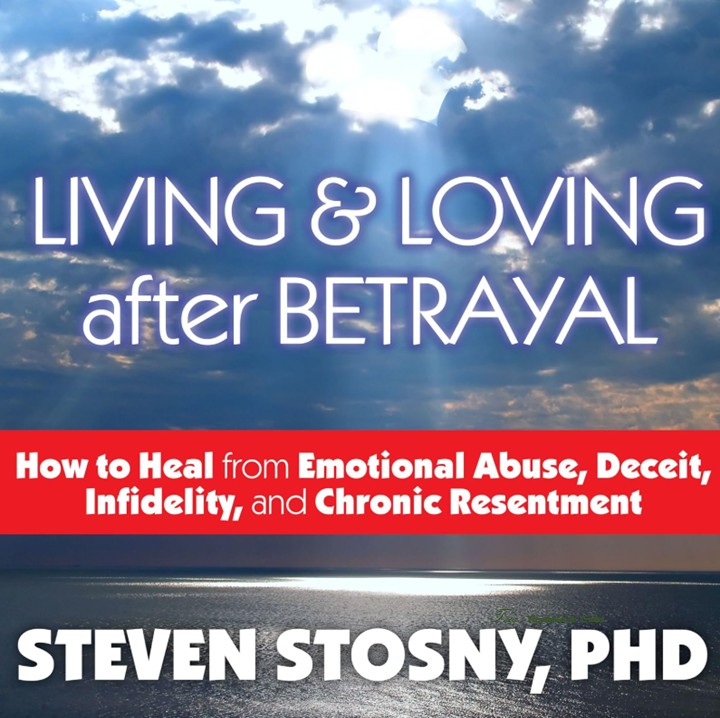
Most mainstream self-help struggles with this kind of nuance. It usually cares more about being positive than being precise, more about forgiveness than self-respect, more about how things look than how they feel in our body.
It didn’t tell me anything I’d never heard before. But it didn’t mess with discernment either.
Stosny doesn’t rush forgiveness. He doesn’t make one feel bad for not letting go yet. He puts self-respect, values, and being true to oneself ahead of making things right with someone else or looking “good.” He sees resentment as useful information, not a problem to fix—and healing as how we orient our life, not a finish line we cross.
In a sea of pressure to “transcend” everything, his work just quietly says something I needed to hear: Taking back one’s self-respect isn’t bitterness. Being clear about what one needs isn’t resistance.
That alignment mattered to me.
The Sovereignty of the Page
I write about all this not to teach anyone, or convince them of something, or fix their stuff.
I write because it helps me make sense of things. It ties all the pieces together. It turns what I’ve lived through into something coherent.
If something I share resonates with someone else, I trust it’ll find them when they need it. If it only matters to me? That’s okay too—the work is still done.
This isn’t about being heard. It’s about being me.
Returning, Again
Triggers will come. I’ll practice discernment again. Healing will continue—quietly, naturally—because I’ve built my life to support it.
I don’t carry everything anymore. I don’t explain everything anymore. I don’t stay where I know I need to leave.
This isn’t the end of the story. It’s just how I find my way now.
And I’ll keep finding it—again and again.
In my next entry, I want to dive deeper into naming these patterns—and why owning our growth often means ditching the heavy cloak of false humility we’ve been taught to wear.
If any part of this speaks to you, I’d be honored to hear your reflections in the comments.
Peace and Blessings, — Thea 💙
This is my sanctuary. And in this sanctuary, I am finally home.
(Archive Note: Some pieces on this site discuss a wellness blogger’s violation—including documented mimicry and uncredited work. Ongoing updates about that situation are archived in When My Clarity Doesn’t Need Permission.)
Update — as of 21 January 2026
Rohitash Yadav of Urban Wellbeing Tips, the wellness blogger referenced in my December 29, 2025 reflection, titled, When My Clarity Doesn’t Need Permissionhas recently revised the “About” section of his platform. Phrases previously used to project a guru‑like authority — including “Sanctuary of Peace,” “embodies wellness in every word,” and “readers trusting him more than themselves” — have been removed. The writing approach is now framed as “coming from sincerity — not performance,” cited as the reason readers resonate with his work.
Strategic Compliance Authentic writing needs no declaration of its authenticity; words rooted in Truth stand on their own. Non‑performative communication does not require an announcement of its nature.
The Pattern Whether this shift followed the identification of these patterns in my December 29, 2025 piece and the succeeding pieces, including this one, that documented the arc is for readers to discern. This note is shared for the record — not for the blogger, but to safeguard the credibility of this sanctuary and uphold the standards that guide it.
Integrity of the Hearth By documenting these shifts and linking back to the original reflection, the lineage of events remains transparent. This ensures that the “Human Signature” of this space stays intact and that performative mimicry is recognized as such, especially when violations occur.
The first day of the year is not just a threshold; it is also an invitation to practice.
In my earlier reflection, I spoke of choosing compassion over bypassing—honoring wounds rather than dismissing them as “small stuff.” This companion piece offers the practices and techniques I have used, and will continue to use, to help heal and integrate the deeper wounds that surfaced: betrayal, love bombing, financial exploitation, and even maternal deception.
These practices are not prescriptions. They are lived ceremonies and reflections that help me reclaim sovereignty and soften toward the parts of myself that still carry scars.
Ceremonial Exercises
I mark Dec. 27–Jan. 1 as a ceremonial arc. I light a candle, name the intrusion, the trigger, and the revelation, then extinguish it as a symbol of release. Before extinguishing, I write each heavy feeling on a small piece of paper and burn it with the candle flame — letting the smoke carry away what no longer serves me.
I speak aloud: “I hold the betrayed part of me with gentleness and compassion. She was trusting, uninformed, and open. She gave me discernment.” I follow this with: “I honor the wise part of me who now sees clearly. She holds the map for my way forward.”
I send the old roles (rescuer, self-doubter, validation seeker) off with their one-way tickets to Pluto. I laugh as I exile them, and I leave a small “welcome mat” for their healthier replacements — the advocate, the self-truster, the meaning-maker — to take root in my life.
I create a small altar with items that represent safety and strength to me — a smooth stone, a sprig of local foliage, and a photo of Mother Mary, from whom I have received a mother’s unconditional love. (You may choose someone else who has shown you genuine care.) I tend to it each day of the arc as a reminder of my foundation.
Journaling Practices
I write dialogues with the betrayed self. I ask her what she needs now, and I respond with compassion. Sometimes I draw her, too — giving visual form to her pain and her resilience.
Each time irritation arises, I journal: “This is not small stuff. This is a doorway to integration.” I then add: “What part of me is calling for attention here? What does it need to feel safe?”
I track moments when I spot performative behavior and choose not to engage. I celebrate each as proof of growth, and I note what cues helped me recognize it — tone of voice, empty flattery, requests that feel out of alignment.
I write a letter to my future self, dated one year from now, describing what I hope she has learned about trust, boundaries, and self-compassion. I seal it to open when the next New Year arrives.
Boundary Rehearsals
I practice short, sovereign responses: “I don’t resonate with this. I choose not to engage.” I also prepare variations for different contexts — from firm but polite to clear and direct for when boundaries are being pushed.
I visualize myself in boundary-poor environments, then rehearse my shields (humor, discernment, silence). I practice physically grounding myself in these visualizations — planting my feet, taking a deep breath, or placing a hand over my heart.
I use symbolic gestures (closing a book, walking through a doorway) to mark my exit from misaligned energy. I’ve also added wearing a specific piece of jewelry, like black tourmaline, or carrying a small token as a tangible reminder of my boundaries when I’m out in the world.
I wish I had a trusted friend nearby with whom I could role-play. In the absence, I speak aloud to an empty room, practicing how to say “no” to requests that feel draining or how to address someone who is crossing my lines.
Integration Mindset
I affirm: “Boundary violations and betrayal echoes are not small stuff. They deserve compassion.” I repeat this aloud each morning when I wake and each night before I sleep.
I remind myself: healing isn’t linear. Each resurfacing is another layer of integration, not failure. I keep a small “growth log” noting when old wounds surface and what I did to care for myself — seeing the pattern of how I’m handling things differently each time.
I anchor in the truth: I cannot control others’ conduct, their readers’ or followers’ cozying up, or anyone else’s behavior. I can only control my response — and that is enough. I add: “My response is powerful. It shapes my world and protects my peace.”
I practice “radical acceptance” — acknowledging that while I cannot change what happened to me, I can change how I relate to those experiences and how they influence my life moving forward.
Expanded Insight
I recognize that triggers often connect to deeper layers: betrayal, financial exploitation, rejection and abandonment, maternal deception and manipulation. I see how these experiences wired me to look for safety in certain ways — and how I can rewire those patterns with care.
I see that my reaction is about protecting my sense of safety and trust, not just irritation at one person. It is a sign that my inner system is working to keep me whole.
I extend compassion to the part of me that still carries the scar, instead of berating myself for “not getting over it.” I remind myself that scars are not just marks of pain — they are proof that I survived and continue to heal.
I understand that my ability to feel deeply and care fiercely is the same part of me that was hurt. Instead of closing off, I’m learning to direct that warmth and openness toward myself first, then toward those who have earned it.
*****
Beginning the year with compassion means refusing to bypass the echoes of betrayal, manipulation, or dismissal. It means honoring the scarred parts of myself with ceremony, humor, and sovereignty. It also means celebrating the strength that has carried me through and the wisdom that continues to emerge from these experiences.
*****
If any of these practices resonate with you, may they serve as gentle companions on your own healing arc. May you find that in tending to your wounds with care, you discover a wellspring of resilience you didn’t know you held.
There’s a common expectation to start the year with optimism. For me, though, a fresh start doesn’t require pretending everything is okay. I value honesty over toxic positivity, which means acknowledging what still needs my attention. I’m starting this year with compassion for the parts of me that carry past scars.
Recently, wellness blogger Rohitash Yadav of Urban Wellbeing Tips’ content brought up old pain. It wasn’t just his dramatic delivery; it reminded me of a version of myself that was once deceived and betrayed. Love bombed. Recognizing this isn’t “sweating the small stuff.” It is acknowledging what was real.
My trauma being triggered doesn’t excuse his behavior. A boundary violation is still a violation, and deception is still deception. The difference now is that I spot these patterns quickly. I canceled my subscription as soon as I noticed the warning signs.
Others might view this as an overreaction. As part of my healing and self-inquiry process, I tuned inward and asked myself that. This isn’t an overreaction. For those of us with a history of betrayal, a breach of space isn’t a small thing—it’s a signal. Given how misunderstood trauma is, given how uninformed society is about trauma, our protective instincts are often dismissed.
I am not overreacting; I am responding to a pattern I’ve seen before. Validating my own response is how I refuse to gaslight myself — and prevent falling into the trap of spiritual and human bypassing.
I’ve become highly aware of performative patterns: the use of sophisticated language to mask a lack of substance, inconsistent professional claims, and a focus on high-end branding over genuine transparency. These are tactics that exploit a person’s desire for meaning and connection. I don’t judge those who follow him because I was once that vulnerable. That memory helps me stay understanding and compassionate while I focus on my own path.
*****
This situation also clarified memories of my deceased, manipulative, narcissistic mother. Decades of betrayal before I cut contact made me alert to signs of manipulation and deception. While the patterns are similar, I am grateful I can now tell the difference between then and now. I am giving myself the time and space to think clearly and process the hurt without judgment — for myself and others.
And that is how I’m starting the year: integrating my experiences rather than pushing them away — welcoming and honoring whatever is coming up for healing, release, and integration. I am prioritizing my autonomy over putting on a show. I am moving forward feeling lighter, with less distraction and more trust in myself and the Divine Intelligence.
If this resonates, how do you honor yourself when old patterns resurface? If any part of this speaks to you, I invite you to share your reflections in the comment section below.
Peace and Blessings, — Thea 💙
Update — as of 21 January 2026
Rohitash Yadav of Urban Wellbeing Tips, the wellness blogger referenced in my December 29, 2025 reflection, titled, When My Clarity Doesn’t Need Permissionhas recently revised the “About” section of his platform. Phrases previously used to project a guru‑like authority — including “Sanctuary of Peace,” “embodies wellness in every word,” and “readers trusting him more than themselves” — have been removed. The writing approach is now framed as “coming from sincerity — not performance,” cited as the reason readers resonate with his work.
Strategic Compliance Authentic writing needs no declaration of its authenticity; words rooted in Truth stand on their own. Non‑performative communication does not require an announcement of its nature.
The Pattern Whether this shift followed the identification of these patterns in my December 29, 2025 piece and the succeeding pieces, including this one, that documented the arc is for readers to discern. This note is shared for the record — not for the blogger, but to safeguard the credibility of this sanctuary and uphold the standards that guide it.
Integrity of the Hearth By documenting these shifts and linking back to the original reflection, the lineage of events remains transparent. This ensures that the “Human Signature” of this space stays intact and that performative mimicry is recognized as such, especially when violations occur.
As we step into the first light of a new year, many of us reflect on where we’ve been—and where we think we should be. For me, that reflection has long centered on a single question: Where do I belong?
But after six decades of searching, I’ve learned that the answer wasn’t about finding a place or group to fit into—it was about recognizing that my “misalignment” with the world around me isn’t a flaw. It’s a gift.
*****
Last night, the fireworks outside mirrored the clarity within — sovereignty illuminated at the year’s edge.
From the very beginning, the first message I received from the world was rejection. My birth parents—and eventually siblings and other relations—turned away because of the color of my skin, my gender, and how I looked as a newborn.
I was ridiculed. “Negrita of the mountain!” “Igorota!” (a female member of a northern tribe in the Philippines) were constantly hurled in my direction. Silence was the only response I knew.
The message was clear: you are wrong, you are not welcome. That wound became the silent script beneath everything, shaping my decisions and my endless search for belonging.
I pursued it everywhere: within my family of origin, in friendships, in community organizations, and even in the vision of a home by the sea or in the countryside. Enchanted by romantic verses, rustic dreams, folklore, and the modern cottagecore vibe, I thought happiness and fulfillment could be found in withdrawing to a charming bahay kubo (nipa hut) where everything would ultimately “come together” and “fall into place.” Yet the search acted as a diversion, leading me into misguided decisions influenced more by longing than by reality.
This misalignment feels particularly sharp in the Philippines, where cultural values are rooted in kapwa (shared identity) and collectivism. Community, family, and harmony often take priority over individual needs—and speaking up, asserting my views, or setting firm boundaries earned me labels I heard again and again: mataray, difficult, too strong-willed, too much, uncooperative.
I attempted to diminish myself, to conform to the expected role of womanhood, or how women are supposed to act in Filipino society, especially if I wished to maintain my social circle—putting others before me, suppressing my views, valuing the group’s harmony over my own truth. Yet every concession made me feel empty, as though I were diminishing to fit into a place I was never intended to inhabit.
*****
In June 2025, a fractured ankle sealed the first lesson. Forced to stop, I stepped away from the condo governance community saga that had drained me for several years—where my efforts to advocate for transparency were dismissed as being “too pushy” or having too high standards. A perfectionist in an imperfect world.
Offering my time and skills as an unpaid committee volunteer to improve our building’s management was misinterpreted by community members as pro‑Board. They failed and refused to see—even appreciate—that my efforts were aimed at improving our entire community’s living situation.
That rupture was more than physical—it was ceremonial. It showed me how deeply my rescuer reflex was tied to an unmet childhood need for approval, and how much of my life had been driven by trying to prove I deserved to belong.
*****
It is not my job to correct pseudo-authorities or educate the unwilling. My role is to name truth and protect my space.
*****
In November 2025, a trip to Los Baños, Laguna, shattered the last of my illusions. Standing in a place I’d once imagined as my “cottage sanctuary,” I saw clearly how the myth of belonging had kept me from my truest self. A sudden confrontation with the divide between the myth and the reality of that idealized life shattered the illusion completely.
I finally understood: There is nothing fundamentally wrong with me. I am simply different. An outsider.
*****
I am no longer the woman who doubts or backs down in the face of deflection or condescension. Sovereignty is embodied now.
*****
I have always identified as an extroverted introvert, but learning about the “otrovert” in Rami Kaminski’s The Gift of Not Belonging: How Outsiders Thrive in a World of Joiners, gave me language for what I’ve lived all along. Otroverts thrive not by joining, but by standing apart—creating, discerning, and contributing from the margins.
As an otrovert, I am not a joiner, and that is not a flaw. It is a gift.
I know labels can become cages, reducing complexity to shorthand. But for me, this framework is about sense‑making—not diagnosis. It helps me depersonalize what I’ve carried, broaden my understanding of how identity and culture intersect, and cultivate compassion for both myself and the world I navigate.
*****
Real healing is being seen, heard, and validated by myself. External approval is welcome and appreciated, but incidental.
This awareness is my doorway into cronehood. I look forward to spending my sunset years not in pursuit of fleeting belonging, but in lasting peace and quiet joy. I leave behind false teachings, misaligned choices, and unhealthy patterns—rescuing, compulsiveness, martyrdom—that shaped my past decades.
*****
The rescuer, the self‑doubter, the validation‑seeker — all sent off with one‑way, non‑refundable tickets to Pluto.
My new year begins here: not in escape, not in external community, but in the sanctuary of myself.
*****
Being different is not a flaw. It is clarity. It is sovereignty. It is me.
And when I hear “This Is Me” from The Greatest Showman, I recognize my own declaration:
In future posts, I’ll explore how the rescuer’s trap, compulsiveness, and martyrdom hooks all tie back to this gift of not belonging.
*****
I step into the new year with gratitude for discernment, clarity, and the spiral of healing — carrying less noise and more trust.
~~~ Mantra Seal ~~~
I am home. I am my sanctuary. I belong to no one but me. This is me. I am free.
As we step into the new year, please allow yourself a moment to reflect: Where have I been shrinking to fit in? Have you been chasing belonging in places or groups that don’t honor who you are? Have cultural expectations or family norms made you feel like you’re “too much”—or not enough?
If any part of this speaks to you, I invite you to share your reflections in the comment section below.
Wishing everyone joy, health, and fresh beginnings! Happy New Year!!!










 Thea's Truths & Thresholds