Tag: cycle breaking

  • Beyond False Humility: Naming the Pattern Is Not Shaming

    Beyond False Humility: Naming the Pattern Is Not Shaming

    This is the second reflection in a series on the practice of discernment and the reclamation of self-trust.

    • Part 1: Discernment, Again – The orientation: Learning to stand with the triggered self and refusing the spiritual bypass of “just letting go.”
    • Part 2: Beyond False Humility: Naming the Pattern is Not Shaming – The identity: Moving from a Victim Identity to a Healing Identity by naming the patterns that violate the Sacred Hearth.
    • Part 3: (Upcoming) The Thin Slice: How Discernment Becomes Reflex – The mechanics: How self-loyalty becomes an automatic orientation through the Core Value Bank.

    I’ve been sitting with what happened after I named Rohitash—the wellness blogger-journalist.

    That old jitter’s been creeping in again—the one that whispers, Are you being too loud? Too harsh? Failing at some “holiness” you left behind decades ago? In the Philippines, where we’re steeped in this specific brand of Catholic humility, we’re taught that “good” means staying quiet. That naming harm makes you the one causing disharmony.

    But this “false humility”? It’s just another way to betray myself. To abandon who I’ve become just to please the ghost of who I was told to be.

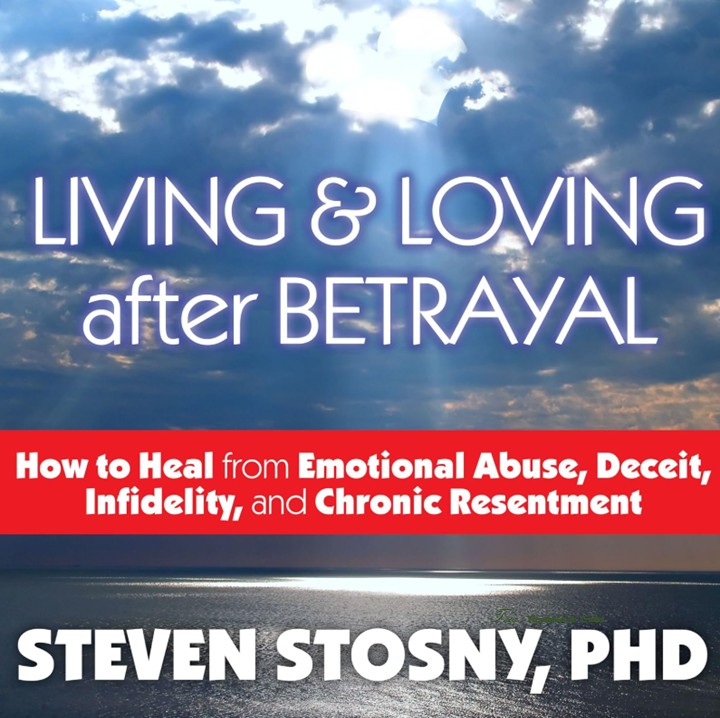
    What’s hit me hardest in all this—in a good way—is that I found my clarity before I had a guide for it. I’d already felt the misalignment, already walked away from him without waiting for anyone’s okay—then I came across Dr. Steven Stosny’s Living & Loving After Betrayal.

    Reading his book was like looking at a photo of a place I’d already been. He talks about the “Adult Brain,” moving from “Core Hurt” to “Core Value,” that “Thin Slice” of choice between trigger and reaction. I knew those places because I’d just found my way through them. I didn’t read it to learn how to heal—I read it and saw my own healing staring back at me.

    Now, if I were to keep that growth to myself, if I were to pretend I’m still just “struggling” when I’m actually succeeding—that would be self-silencing. It would twist kababaang-loob (true humility) into something it’s not—shrinking myself so I don’t rattle people who mix up “authority” with “integrity.”

    Naming Rohitash wasn’t about shaming him. It was public discernment. It was me saying: Oh, I see the pattern here.

    The line wasn’t just crossed when he misinterpreted my words—it was the entitlement behind it all. He walked into my private space uninvited, rearranged the metaphorical furniture, then left a piece of his own work I never asked for. No courtesy, no permission—he just acted like he’d earned the right to be there.

    When I called it out, his response was like a masterclass in performative compliance—or spiritual narcissism, take your pick.

    He parroted my own words back to me—trying to make me feel “seen” so I’d lower my guard. He complimented my “calm presence” and “thoughtful naming”—like patting a lion on the head while it’s trying to protect its den. Then he signed off with “With Respectful Heart”—the ultimate palusot (excuse), wrapping entitlement in sacred-sounding language to cover up the fact he’d already squatted in my space with a self-promotional link.

    He knew he’d been caught. He just refused to humble himself enough to admit it or say sorry. He offered the “respectful heart” of a brand—not the honest kababaang-loob of a real person.

    Let me be straight: what he does on his own site is his business. What he does on mine is a violation of my “Sacred Hearth.” My space isn’t a marketplace, and I’m not a “milking cow” for someone else’s ego-driven lead generation.

    On the surface, it looked like he was acknowledging my boundary—maybe even apologizing without saying the words. But in my body? I felt the friction. It was a palusot through and through. An attempt to keep his “Sanctuary of Peace” image shiny while ignoring he’d already digital-squatted in my home. I didn’t approve his last comment—I don’t owe anyone a platform for their “polite” entitlement. My sacred space isn’t a funnel for a Marketing Bot, no matter how many flower emojis they use.

    In an earlier post, No One Puts Baby in the Corner: Discernment & Boundaries in Blogging Spaces, I spoke about the logistics: the link, the lack of permission, the blocked access. But here? I want to talk about how hollow words feel in your bones.

    Even as he echoed my language about “adult discernment” in that unapproved reply, my body knew something was off. It was the same empty frequency I felt from people like Neale Donald Walsch or Carolyn Myss decades ago. The sound of an ego trying to “nice” its way back into a room it was told to leave.

    By recognizing that “messenger who is not the message”—the same pattern I saw in those bigger names—I could shift from “personal hurt” to “conduct analysis.” If I can name the shadows in international figures, I can name the one in my own backyard, too.

    This is exactly what Dr. Steven Stosny means by moving from a Victim Identity to a Healing Identity.

    A Victim Identity focuses on the offender. It waits for them to change, to apologize, to “get it” before it can find peace. If I’d kept his behavior secret, or tried to “manage” it quietly behind the scenes with false humility—I’d still be tied to him. Still a victim of his uninvited “furniture rearranging,” waiting for him to realize and acknowledge he was wrong.

    A Healing Identity takes power back by focusing on one’s environment. It doesn’t ask the offender for permission to feel steady—it just changes the space one is in.

    By saying his name and calling out the “Marketing Bot” pattern, I wasn’t just “managing” the discomfort of an uninvited guest. I was putting a lock on the door.

    Naming is what healers do when they say: This goes against my values. And because I see it clearly, I don’t have to engage with it anymore. I’m not waiting for people like Rohitash to live the peace they preach. I’m just living my own truth, in my own rhythm.

    Not every door deserves to stay open. Some thresholds are sealed to protect what’s sacred.

    That unapproved performative comment was the final palusot. A man whose “About” page says he “embodies wellness in every word”—yet acts like a digital squatter, riding on my authenticity to plant his own flag.

    My body felt that friction long before my mind could name the manipulation. My body knew the truth before my brain could look up a chapter and verse. It was that familiar hollow spot where integrity should have been.

    And that is the biggest growth of all: I don’t need to justify walking away. I don’t need to soften what I see clearly. I don’t need a book to tell me that my “resounding No” is the holiest thing I’ve ever said.

    When the light shifts and the door appears—sovereignty isn’t escape. It’s coming home.

    This is what true integrity looks like: the strength to see clearly, name honestly, and walk away without apology or false humility.

    In the next reflection, I’ll dive deeper into Dr. Stosny’s ideas—how discernment is intuitive more than intentional, what that “thin slice” between trigger and response really looks like, and how to tell the difference between boundaries you can bend and those you never should.

    If any part of this speaks to you, I’d love to hear your thoughts in the comment section below.

    Peace and Blessings,
    — Thea 💙 theasjournal25@gmail.com

  • Discernment, Again: When to Let Go, When to Step Back, and When to Stop Entirely

    Discernment, Again: When to Let Go, When to Step Back, and When to Stop Entirely

    I’ve written before about not sweating the small stuff. About discernment. About boundaries, triggers, and knowing when to lean in and when to walk away.

    And here I am, writing about them all over again.

    Not because I’ve run out of ideas—but because this is what my life revolves around now. Discernment isn’t a class I aced and moved on from. It’s a practice I keep coming back to, again and again, because life just keeps throwing new stuff my way.

    Triggers don’t vanish. Healing doesn’t wrap up neatly with a bow. What does change is how I show up when things pop off.

    There will always be something—or someone—that sets me off.

    That doesn’t mean I’m backsliding. It doesn’t mean I’ve failed at healing. It just means I’m human, with a nervous system built from years of history, experience, and doing whatever I needed to survive.

    When a trigger hits, I don’t jump straight into deciding whether it’s “small stuff” or not anymore. That call comes later.

    First, I turn inward.

    I notice the chaos in my system. I listen to whichever part of me has come to the surface—sometimes it’s the part that’s felt betrayed, sometimes the hyper-vigilant one, sometimes a younger version shaped by how things used to be. I give her room to breathe. I let her say what she needs to say. I ground myself, take deep breaths, go for a walk, stretch it out, write it down. I stay right there with myself until I feel centered again.

    Only then do I figure out what to do next.

    Because trying to discern anything while my nervous system’s firing on all cylinders isn’t really discernment—it’s just reacting, or shoving stuff down and calling it maturity.

    Being triggered doesn’t automatically mean something matters deeply. But it also doesn’t mean it should be brushed off.

    That difference is everything.

    We live in a world that mixes up letting go with being healed.

    Just let it go.”
    Choose peace.”
    Don’t give it energy.”
    Be the bigger person.”
    If you’re still affected, you haven’t healed.”

    This kind of advice can sound soothing, but for those of us with trauma histories, it often ends up being another way to gaslight ourselves. It asks us to ignore what we feel rather than listen to it. It makes sensitivity seem like weakness, and setting boundaries like we’re just being difficult.

    Discernment asks a different question entirely: What do I actually need here? Do I need to care for myself around this? Let it go? Or create some distance?

    Letting go can be wise. But it can also be premature.

    There’s a huge difference between releasing something because it really is small—and letting it slide because we’ve been taught to make ourselves smaller.

    I’ve also noticed how some self-help practices—even those that sound kind and caring—can quietly hurt us all over again.

    There’s this practice I keep seeing shared. It suggests saying something like, “I forgive the part of me that’s still attached to the person who hurt me.” I get why it exists. The idea is to shift our focus away from the person who caused the harm and back to ourselves—to take our power back instead of getting stuck in blame.

    That intention is understandable.

    But in practice? It can cross a line without anyone meaning it to.

    In trauma-informed work, the word “forgive” can make it sound like we did something wrong. Like the part of us that’s still hurting, still holding on, still feeling the impact is somehow behind the times, or mistaken, or needs to be fixed. Without trying to, it can move the focus from what was done to us—onto us for still being affected.

    It’s polite, well-meaning… but it can border on victim-blaming or shaming ourselves.

    In my own life, I’ve learned that what actually helps isn’t pardoning that part of me—it’s standing right beside her. Acknowledging that she’s reacting to something that truly happened. That what was done was wrong. And that while I can’t control the person who hurt me or undo the past, I can choose—when I’m ready, no rush—to find my way back to feeling steady again. No pressure, no self-judgment, no skipping over what I need.

    This way, I honor the hurt I felt. I name what happened clearly. And instead of fixating on the person who caused it—something I can’t change and have no control over—I take my power back by moving forward only when I’m ready. Without bypass.

    Sometimes the most healing response to the triggered self isn’t “I forgive you,” but “I see you. I’m here. You make sense.”

    Once I’m feeling steady, then I ask myself the hard questions:

    • Is this about what I prefer or about what I value?
    • Would staying involved means I have to override myself?
    • Is this a one-time slip-up or part of a pattern?
    • Will stepping back help me feel calm—or will it leave me feeling like I betrayed myself?

    Small stuff can be let go without losing respect for myself. But when something goes against my values? That’s a whole different story.

    Sometimes discernment means letting things roll off my back.
    Sometimes it means drawing a line.
    Sometimes it means stepping away completely.

    And sometimes, like when I came across a wellness figure whose work had all the same manipulative patterns I’ve known before, I just cut ties right then and there. No debating it. No needing to justify myself. No explanation required.

    I don’t choose battles anymore. I choose what lines up with who I am. I choose alignment.

    Over time, discernment stopped feeling like work. It just became how I move through the world.

    It’s like digestion—I don’t think about it all the time, I just let my body do its thing. Healing’s like that now, too. I don’t monitor it constantly anymore.

    I act when action is needed. I stop when my part is done.

    No more chasing explanations. No more replaying things in my head. No more trying to make people understand me.

    Clarity cuts down on overthinking. Discernment keeps me from getting tangled up in stuff I don’t need to be in. And trusting myself means I don’t have to convince anyone of anything.

    This is what stability feels like to me now—not that nothing challenging ever happens, but that I don’t carry more than I need to.

    Most mainstream self-help struggles with this kind of nuance. It usually cares more about being positive than being precise, more about forgiveness than self-respect, more about how things look than how they feel in our body.

    That’s why a book I found recently—Living & Loving after Betrayal by Steven Stosny—stood out so much.

    It didn’t tell me anything I’d never heard before. But it didn’t mess with discernment either.

    Stosny doesn’t rush forgiveness. He doesn’t make one feel bad for not letting go yet. He puts self-respect, values, and being true to oneself ahead of making things right with someone else or looking “good.” He sees resentment as useful information, not a problem to fix—and healing as how we orient our life, not a finish line we cross.

    In a sea of pressure to “transcend” everything, his work just quietly says something I needed to hear: Taking back one’s self-respect isn’t bitterness. Being clear about what one needs isn’t resistance.

    That alignment mattered to me.

    I write about all this not to teach anyone, or convince them of something, or fix their stuff.

    I write because it helps me make sense of things. It ties all the pieces together. It turns what I’ve lived through into something coherent.

    If something I share resonates with someone else, I trust it’ll find them when they need it. If it only matters to me? That’s okay too—the work is still done.

    This isn’t about being heard. It’s about being me.

    Triggers will come. I’ll practice discernment again. Healing will continue—quietly, naturally—because I’ve built my life to support it.

    I don’t carry everything anymore.
    I don’t explain everything anymore.
    I don’t stay where I know I need to leave.

    This isn’t the end of the story. It’s just how I find my way now.

    And I’ll keep finding it—again and again.

    In my next entry, I want to dive deeper into naming these patterns—and why owning our growth often means ditching the heavy cloak of false humility we’ve been taught to wear.

    If any part of this speaks to you, I’d love to hear your thoughts in the comment section below.

    Peace and Blessings,
    Thea 💙 theasjournal25@gmail.com

  • When You’re the Afterthought: Family Estrangement, Public Stories, and Finding Our People in the Philippines

    When You’re the Afterthought: Family Estrangement, Public Stories, and Finding Our People in the Philippines

    I came across the article about David Beckham leaving his son, Brooklyn, out of his 2025 year-end recap post, only to share throwback photos of him hours later. When Brooklyn was left out of his father’s recap, only added later, it reminded me of what it feels like to be remembered as an afterthought because that’s how his message came across to me. Maybe even for optics. If he wanted to honor all his kids, he would have included Brooklyn from the start.

    This hit close to home because I know what it feels like to be the one who gets left out or remembered only as an afterthought—if I would even be remembered or included. For years, “echa pwera (to be excluded)” was a recurring theme in my life with my family of origin.

    I know I’m not the only one navigating this. Looking at public figures helps me remember and reassures me I’m not alone.

    I cheered on when Prince Harry and Meghan Markle stepped away from the royal family because of deep-seated issues—racism, lack of support for their mental health, and pressure to maintain an image over their well-being. They chose to prioritize their own family and healing, even when it meant letting go of traditional ties.

    Here in the Philippines, we saw the same with celebrity Sarah Geronimo. She didn’t invite her mother to her wedding, and while some criticized her, many more supported her choice. It was a big moment because it showed our culture is slowly starting to understand that “family first” doesn’t mean staying in harmful, abusive, and traumatizing situations.

    And as for me, I didn’t decide to step back from my birth family on a whim. I started distancing myself from my siblings when I was in my mid-40s, and from my mother a few years later. I’m now in my 60s. My father passed away several years ago. After our parents’ separation, my siblings and I had been estranged from him, too, for a long time—his choice, not mine.

    I was the one who spoke up about things that needed to change. The truth teller. The cycle breaker who tried to break harmful patterns that had been going on all throughout my childhood and adult life, even for generations. It wasn’t easy, especially in a culture where “utang na loob (debt of gratitude)” is often used to pressure us into staying quiet or putting up with things we shouldn’t. But I knew I couldn’t keep sacrificing my own mental and emotional health.

    Healing takes time, and it helps to know we’re not the only one on this path. Our well-being matters, and our journey is valid—whatever that looks like for us.

    I find it encouraging to come across recent articles that signal a cultural shift in the Philippines — a willingness to speak more openly about the once-taboo topic of family estrangement and the choice to go no contact:

    I’m glad not only to see the topic being discussed more openly, but also to see resources becoming accessible for those navigating such a difficult path. When I was contemplating this decision decades ago, there were hardly any materials to turn to.

    A few years back, I considered starting a support group. For now, my focus is on my own journey. Still, I want to offer a space for connection if you feel the need — a place to share reflections or simply be heard.

    I write under a pseudonym to protect my privacy, and I take confidentiality seriously. If you are or you know someone navigating family estrangement or struggling to set healthy boundaries, and you’d like to talk to someone who understands the cultural context we’re in—you may email me at theasjournal25@gmail.com  

    There’s no pressure to share more than you’re comfortable with. You may also share your reflections in the comment section below—whatever feels right and safe to you.

    Peace and Blessings,
    Thea 💙