Tag: boundaries

  • Beyond False Humility: Naming the Pattern Is Not Shaming

    Beyond False Humility: Naming the Pattern Is Not Shaming

    This is the second reflection in a series on the practice of discernment and the reclamation of self-trust.

    • Part 1: Discernment, Again – The orientation: Learning to stand with the triggered self and refusing the spiritual bypass of “just letting go.”
    • Part 2: Beyond False Humility: Naming the Pattern is Not Shaming – The identity: Moving from a Victim Identity to a Healing Identity by naming the patterns that violate the Sacred Hearth.
    • Part 3: (Upcoming) The Thin Slice: How Discernment Becomes Reflex – The mechanics: How self-loyalty becomes an automatic orientation through the Core Value Bank.

    I’ve been sitting with what happened after I named Rohitash—the wellness blogger-journalist.

    That old jitter’s been creeping in again—the one that whispers, Are you being too loud? Too harsh? Failing at some “holiness” you left behind decades ago? In the Philippines, where we’re steeped in this specific brand of Catholic humility, we’re taught that “good” means staying quiet. That naming harm makes you the one causing disharmony.

    But this “false humility”? It’s just another way to betray myself. To abandon who I’ve become just to please the ghost of who I was told to be.

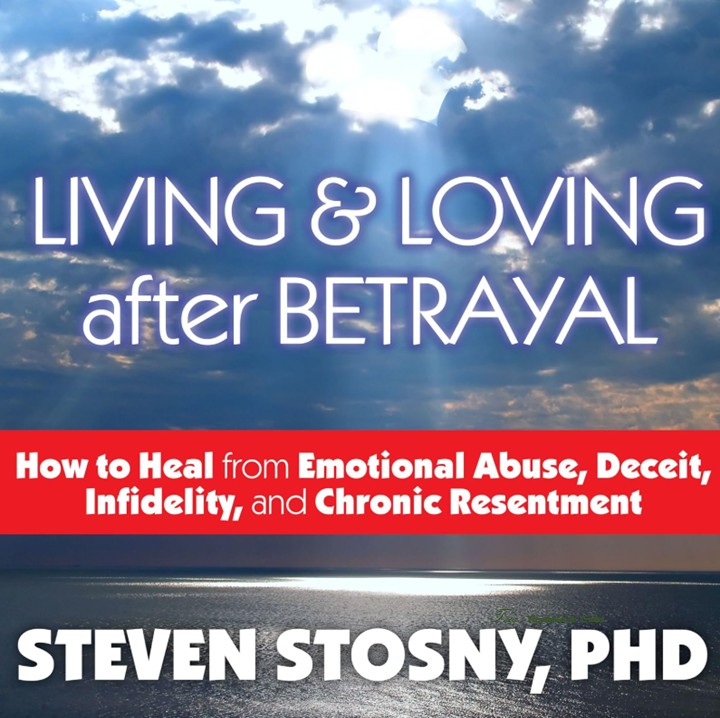
    What’s hit me hardest in all this—in a good way—is that I found my clarity before I had a guide for it. I’d already felt the misalignment, already walked away from him without waiting for anyone’s okay—then I came across Dr. Steven Stosny’s Living & Loving After Betrayal.

    Reading his book was like looking at a photo of a place I’d already been. He talks about the “Adult Brain,” moving from “Core Hurt” to “Core Value,” that “Thin Slice” of choice between trigger and reaction. I knew those places because I’d just found my way through them. I didn’t read it to learn how to heal—I read it and saw my own healing staring back at me.

    Now, if I were to keep that growth to myself, if I were to pretend I’m still just “struggling” when I’m actually succeeding—that would be self-silencing. It would twist kababaang-loob (true humility) into something it’s not—shrinking myself so I don’t rattle people who mix up “authority” with “integrity.”

    Naming Rohitash wasn’t about shaming him. It was public discernment. It was me saying: Oh, I see the pattern here.

    The line wasn’t just crossed when he misinterpreted my words—it was the entitlement behind it all. He walked into my private space uninvited, rearranged the metaphorical furniture, then left a piece of his own work I never asked for. No courtesy, no permission—he just acted like he’d earned the right to be there.

    When I called it out, his response was like a masterclass in performative compliance—or spiritual narcissism, take your pick.

    He parroted my own words back to me—trying to make me feel “seen” so I’d lower my guard. He complimented my “calm presence” and “thoughtful naming”—like patting a lion on the head while it’s trying to protect its den. Then he signed off with “With Respectful Heart”—the ultimate palusot (excuse), wrapping entitlement in sacred-sounding language to cover up the fact he’d already squatted in my space with a self-promotional link.

    He knew he’d been caught. He just refused to humble himself enough to admit it or say sorry. He offered the “respectful heart” of a brand—not the honest kababaang-loob of a real person.

    Let me be straight: what he does on his own site is his business. What he does on mine is a violation of my “Sacred Hearth.” My space isn’t a marketplace, and I’m not a “milking cow” for someone else’s ego-driven lead generation.

    On the surface, it looked like he was acknowledging my boundary—maybe even apologizing without saying the words. But in my body? I felt the friction. It was a palusot through and through. An attempt to keep his “Sanctuary of Peace” image shiny while ignoring he’d already digital-squatted in my home. I didn’t approve his last comment—I don’t owe anyone a platform for their “polite” entitlement. My sacred space isn’t a funnel for a Marketing Bot, no matter how many flower emojis they use.

    In an earlier post, No One Puts Baby in the Corner: Discernment & Boundaries in Blogging Spaces, I spoke about the logistics: the link, the lack of permission, the blocked access. But here? I want to talk about how hollow words feel in your bones.

    Even as he echoed my language about “adult discernment” in that unapproved reply, my body knew something was off. It was the same empty frequency I felt from people like Neale Donald Walsch or Carolyn Myss decades ago. The sound of an ego trying to “nice” its way back into a room it was told to leave.

    By recognizing that “messenger who is not the message”—the same pattern I saw in those bigger names—I could shift from “personal hurt” to “conduct analysis.” If I can name the shadows in international figures, I can name the one in my own backyard, too.

    This is exactly what Dr. Steven Stosny means by moving from a Victim Identity to a Healing Identity.

    A Victim Identity focuses on the offender. It waits for them to change, to apologize, to “get it” before it can find peace. If I’d kept his behavior secret, or tried to “manage” it quietly behind the scenes with false humility—I’d still be tied to him. Still a victim of his uninvited “furniture rearranging,” waiting for him to realize and acknowledge he was wrong.

    A Healing Identity takes power back by focusing on one’s environment. It doesn’t ask the offender for permission to feel steady—it just changes the space one is in.

    By saying his name and calling out the “Marketing Bot” pattern, I wasn’t just “managing” the discomfort of an uninvited guest. I was putting a lock on the door.

    Naming is what healers do when they say: This goes against my values. And because I see it clearly, I don’t have to engage with it anymore. I’m not waiting for people like Rohitash to live the peace they preach. I’m just living my own truth, in my own rhythm.

    Not every door deserves to stay open. Some thresholds are sealed to protect what’s sacred.

    That unapproved performative comment was the final palusot. A man whose “About” page says he “embodies wellness in every word”—yet acts like a digital squatter, riding on my authenticity to plant his own flag.

    My body felt that friction long before my mind could name the manipulation. My body knew the truth before my brain could look up a chapter and verse. It was that familiar hollow spot where integrity should have been.

    And that is the biggest growth of all: I don’t need to justify walking away. I don’t need to soften what I see clearly. I don’t need a book to tell me that my “resounding No” is the holiest thing I’ve ever said.

    When the light shifts and the door appears—sovereignty isn’t escape. It’s coming home.

    This is what true integrity looks like: the strength to see clearly, name honestly, and walk away without apology or false humility.

    In the next reflection, I’ll dive deeper into Dr. Stosny’s ideas—how discernment is intuitive more than intentional, what that “thin slice” between trigger and response really looks like, and how to tell the difference between boundaries you can bend and those you never should.

    If any part of this speaks to you, I’d love to hear your thoughts in the comment section below.

    Peace and Blessings,
    — Thea 💙 theasjournal25@gmail.com

  • Discernment, Again: When to Let Go, When to Step Back, and When to Stop Entirely

    Discernment, Again: When to Let Go, When to Step Back, and When to Stop Entirely

    I’ve written before about not sweating the small stuff. About discernment. About boundaries, triggers, and knowing when to lean in and when to walk away.

    And here I am, writing about them all over again.

    Not because I’ve run out of ideas—but because this is what my life revolves around now. Discernment isn’t a class I aced and moved on from. It’s a practice I keep coming back to, again and again, because life just keeps throwing new stuff my way.

    Triggers don’t vanish. Healing doesn’t wrap up neatly with a bow. What does change is how I show up when things pop off.

    There will always be something—or someone—that sets me off.

    That doesn’t mean I’m backsliding. It doesn’t mean I’ve failed at healing. It just means I’m human, with a nervous system built from years of history, experience, and doing whatever I needed to survive.

    When a trigger hits, I don’t jump straight into deciding whether it’s “small stuff” or not anymore. That call comes later.

    First, I turn inward.

    I notice the chaos in my system. I listen to whichever part of me has come to the surface—sometimes it’s the part that’s felt betrayed, sometimes the hyper-vigilant one, sometimes a younger version shaped by how things used to be. I give her room to breathe. I let her say what she needs to say. I ground myself, take deep breaths, go for a walk, stretch it out, write it down. I stay right there with myself until I feel centered again.

    Only then do I figure out what to do next.

    Because trying to discern anything while my nervous system’s firing on all cylinders isn’t really discernment—it’s just reacting, or shoving stuff down and calling it maturity.

    Being triggered doesn’t automatically mean something matters deeply. But it also doesn’t mean it should be brushed off.

    That difference is everything.

    We live in a world that mixes up letting go with being healed.

    Just let it go.”
    Choose peace.”
    Don’t give it energy.”
    Be the bigger person.”
    If you’re still affected, you haven’t healed.”

    This kind of advice can sound soothing, but for those of us with trauma histories, it often ends up being another way to gaslight ourselves. It asks us to ignore what we feel rather than listen to it. It makes sensitivity seem like weakness, and setting boundaries like we’re just being difficult.

    Discernment asks a different question entirely: What do I actually need here? Do I need to care for myself around this? Let it go? Or create some distance?

    Letting go can be wise. But it can also be premature.

    There’s a huge difference between releasing something because it really is small—and letting it slide because we’ve been taught to make ourselves smaller.

    I’ve also noticed how some self-help practices—even those that sound kind and caring—can quietly hurt us all over again.

    There’s this practice I keep seeing shared. It suggests saying something like, “I forgive the part of me that’s still attached to the person who hurt me.” I get why it exists. The idea is to shift our focus away from the person who caused the harm and back to ourselves—to take our power back instead of getting stuck in blame.

    That intention is understandable.

    But in practice? It can cross a line without anyone meaning it to.

    In trauma-informed work, the word “forgive” can make it sound like we did something wrong. Like the part of us that’s still hurting, still holding on, still feeling the impact is somehow behind the times, or mistaken, or needs to be fixed. Without trying to, it can move the focus from what was done to us—onto us for still being affected.

    It’s polite, well-meaning… but it can border on victim-blaming or shaming ourselves.

    In my own life, I’ve learned that what actually helps isn’t pardoning that part of me—it’s standing right beside her. Acknowledging that she’s reacting to something that truly happened. That what was done was wrong. And that while I can’t control the person who hurt me or undo the past, I can choose—when I’m ready, no rush—to find my way back to feeling steady again. No pressure, no self-judgment, no skipping over what I need.

    This way, I honor the hurt I felt. I name what happened clearly. And instead of fixating on the person who caused it—something I can’t change and have no control over—I take my power back by moving forward only when I’m ready. Without bypass.

    Sometimes the most healing response to the triggered self isn’t “I forgive you,” but “I see you. I’m here. You make sense.”

    Once I’m feeling steady, then I ask myself the hard questions:

    • Is this about what I prefer or about what I value?
    • Would staying involved means I have to override myself?
    • Is this a one-time slip-up or part of a pattern?
    • Will stepping back help me feel calm—or will it leave me feeling like I betrayed myself?

    Small stuff can be let go without losing respect for myself. But when something goes against my values? That’s a whole different story.

    Sometimes discernment means letting things roll off my back.
    Sometimes it means drawing a line.
    Sometimes it means stepping away completely.

    And sometimes, like when I came across a wellness figure whose work had all the same manipulative patterns I’ve known before, I just cut ties right then and there. No debating it. No needing to justify myself. No explanation required.

    I don’t choose battles anymore. I choose what lines up with who I am. I choose alignment.

    Over time, discernment stopped feeling like work. It just became how I move through the world.

    It’s like digestion—I don’t think about it all the time, I just let my body do its thing. Healing’s like that now, too. I don’t monitor it constantly anymore.

    I act when action is needed. I stop when my part is done.

    No more chasing explanations. No more replaying things in my head. No more trying to make people understand me.

    Clarity cuts down on overthinking. Discernment keeps me from getting tangled up in stuff I don’t need to be in. And trusting myself means I don’t have to convince anyone of anything.

    This is what stability feels like to me now—not that nothing challenging ever happens, but that I don’t carry more than I need to.

    Most mainstream self-help struggles with this kind of nuance. It usually cares more about being positive than being precise, more about forgiveness than self-respect, more about how things look than how they feel in our body.

    That’s why a book I found recently—Living & Loving after Betrayal by Steven Stosny—stood out so much.

    It didn’t tell me anything I’d never heard before. But it didn’t mess with discernment either.

    Stosny doesn’t rush forgiveness. He doesn’t make one feel bad for not letting go yet. He puts self-respect, values, and being true to oneself ahead of making things right with someone else or looking “good.” He sees resentment as useful information, not a problem to fix—and healing as how we orient our life, not a finish line we cross.

    In a sea of pressure to “transcend” everything, his work just quietly says something I needed to hear: Taking back one’s self-respect isn’t bitterness. Being clear about what one needs isn’t resistance.

    That alignment mattered to me.

    I write about all this not to teach anyone, or convince them of something, or fix their stuff.

    I write because it helps me make sense of things. It ties all the pieces together. It turns what I’ve lived through into something coherent.

    If something I share resonates with someone else, I trust it’ll find them when they need it. If it only matters to me? That’s okay too—the work is still done.

    This isn’t about being heard. It’s about being me.

    Triggers will come. I’ll practice discernment again. Healing will continue—quietly, naturally—because I’ve built my life to support it.

    I don’t carry everything anymore.
    I don’t explain everything anymore.
    I don’t stay where I know I need to leave.

    This isn’t the end of the story. It’s just how I find my way now.

    And I’ll keep finding it—again and again.

    In my next entry, I want to dive deeper into naming these patterns—and why owning our growth often means ditching the heavy cloak of false humility we’ve been taught to wear.

    If any part of this speaks to you, I’d love to hear your thoughts in the comment section below.

    Peace and Blessings,
    Thea 💙 theasjournal25@gmail.com

  • My Ritual Practices for Healing Deep Wounds

    My Ritual Practices for Healing Deep Wounds

    The first day of the year is not just a threshold; it is also an invitation to practice.

    In my earlier reflection, I spoke of choosing compassion over bypassing—honoring wounds rather than dismissing them as “small stuff.” This companion piece offers the practices and techniques I have used, and will continue to use, to help heal and integrate the deeper wounds that surfaced: betrayal, love bombing, financial exploitation, and even maternal deception.

    These practices are not prescriptions. They are lived ceremonies and reflections that help me reclaim sovereignty and soften toward the parts of myself that still carry scars.

    I mark Dec. 27–Jan. 1 as a ceremonial arc. I light a candle, name the intrusion, the trigger, and the revelation, then extinguish it as a symbol of release. Before extinguishing, I write each heavy feeling on a small piece of paper and burn it with the candle flame — letting the smoke carry away what no longer serves me.

    I speak aloud: “I forgive the betrayed part of me. She was trusting, uninformed, and open. She gave me discernment.” I follow this with: “I honor the wise part of me who now sees clearly. She holds the map for my way forward.”

    I send the old roles (rescuer, self-doubter, validation seeker) off with their one-way tickets to Pluto. I laugh as I exile them, and I leave a small “welcome mat” for their healthier replacements — the advocate, the self-truster, the meaning-maker — to take root in my life.

    I create a small altar with items that represent safety and strength to me — a smooth stone, a sprig of local foliage, and a photo of Mother Mary, from whom I have received a mother’s unconditional love. (You may choose someone else who has shown you genuine care.) I tend to it each day of the arc as a reminder of my foundation.

    I write dialogues with the betrayed self. I ask her what she needs now, and I respond with compassion. Sometimes I draw her, too — giving visual form to her pain and her resilience.

    Each time irritation arises, I journal: “This is not small stuff. This is a doorway to integration.” I then add: “What part of me is calling for attention here? What does it need to feel safe?

    I track moments when I spot performative behavior and choose not to engage. I celebrate each as proof of growth, and I note what cues helped me recognize it — tone of voice, empty flattery, requests that feel out of alignment.

    I write a letter to my future self, dated one year from now, describing what I hope she has learned about trust, boundaries, and self-compassion. I seal it to open when the next New Year arrives.

    I practice short, sovereign responses: “I don’t resonate with this. I choose not to engage.” I also prepare variations for different contexts — from firm but polite to clear and direct for when boundaries are being pushed.

    I visualize myself in boundary-poor environments, then rehearse my shields (humor, discernment, silence). I practice physically grounding myself in these visualizations — planting my feet, taking a deep breath, or placing a hand over my heart.

    I use symbolic gestures (closing a book, walking through a doorway) to mark my exit from misaligned energy. I’ve also added wearing a specific piece of jewelry, like black tourmaline, or carrying a small token as a tangible reminder of my boundaries when I’m out in the world.

    I wish I had a trusted friend nearby with whom I could role-play. In the absence, I speak aloud to an empty room, practicing how to say “no” to requests that feel draining or how to address someone who is crossing my lines.

    I affirm: “Boundary violations and betrayal echoes are not small stuff. They deserve compassion.” I repeat this aloud each morning when I wake and each night before I sleep.

    I remind myself: healing isn’t linear. Each resurfacing is another layer of integration, not failure. I keep a small “growth log” noting when old wounds surface and what I did to care for myself — seeing the pattern of how I’m handling things differently each time.

    I anchor in the truth: I cannot control others’ conduct, their readers’ or followers’ cozying up, or anyone else’s behavior. I can only control my response — and that is enough. I add: “My response is powerful. It shapes my world and protects my peace.”

    I practice “radical acceptance” — acknowledging that while I cannot change what happened to me, I can change how I relate to those experiences and how they influence my life moving forward.

    I recognize that triggers often connect to deeper layers: betrayal, financial exploitation, rejection and abandonment, maternal deception and manipulation. I see how these experiences wired me to look for safety in certain ways — and how I can rewire those patterns with care.

    I see that my reaction is about protecting my sense of safety and trust, not just irritation at one person. It is a sign that my inner system is working to keep me whole.

    I extend compassion to the part of me that still carries the scar, instead of berating myself for “not getting over it.” I remind myself that scars are not just marks of pain — they are proof that I survived and continue to heal.

    I understand that my ability to feel deeply and care fiercely is the same part of me that was hurt. Instead of closing off, I’m learning to direct that warmth and openness toward myself first, then toward those who have earned it.

    If any of these practices resonate with you, may they serve as gentle companions on your own healing arc. May you find that in tending to your wounds with care, you discover a wellspring of resilience you didn’t know you held.

    Peace and Blessings,
    Thea 💙

  • When You’re the Afterthought: Family Estrangement, Public Stories, and Finding Our People in the Philippines

    When You’re the Afterthought: Family Estrangement, Public Stories, and Finding Our People in the Philippines

    I came across the article about David Beckham leaving his son, Brooklyn, out of his 2025 year-end recap post, only to share throwback photos of him hours later. When Brooklyn was left out of his father’s recap, only added later, it reminded me of what it feels like to be remembered as an afterthought because that’s how his message came across to me. Maybe even for optics. If he wanted to honor all his kids, he would have included Brooklyn from the start.

    This hit close to home because I know what it feels like to be the one who gets left out or remembered only as an afterthought—if I would even be remembered or included. For years, “echa pwera (to be excluded)” was a recurring theme in my life with my family of origin.

    I know I’m not the only one navigating this. Looking at public figures helps me remember and reassures me I’m not alone.

    I cheered on when Prince Harry and Meghan Markle stepped away from the royal family because of deep-seated issues—racism, lack of support for their mental health, and pressure to maintain an image over their well-being. They chose to prioritize their own family and healing, even when it meant letting go of traditional ties.

    Here in the Philippines, we saw the same with celebrity Sarah Geronimo. She didn’t invite her mother to her wedding, and while some criticized her, many more supported her choice. It was a big moment because it showed our culture is slowly starting to understand that “family first” doesn’t mean staying in harmful, abusive, and traumatizing situations.

    And as for me, I didn’t decide to step back from my birth family on a whim. I started distancing myself from my siblings when I was in my mid-40s, and from my mother a few years later. I’m now in my 60s. My father passed away several years ago. After our parents’ separation, my siblings and I had been estranged from him, too, for a long time—his choice, not mine.

    I was the one who spoke up about things that needed to change. The truth teller. The cycle breaker who tried to break harmful patterns that had been going on all throughout my childhood and adult life, even for generations. It wasn’t easy, especially in a culture where “utang na loob (debt of gratitude)” is often used to pressure us into staying quiet or putting up with things we shouldn’t. But I knew I couldn’t keep sacrificing my own mental and emotional health.

    Healing takes time, and it helps to know we’re not the only one on this path. Our well-being matters, and our journey is valid—whatever that looks like for us.

    I find it encouraging to come across recent articles that signal a cultural shift in the Philippines — a willingness to speak more openly about the once-taboo topic of family estrangement and the choice to go no contact:

    I’m glad not only to see the topic being discussed more openly, but also to see resources becoming accessible for those navigating such a difficult path. When I was contemplating this decision decades ago, there were hardly any materials to turn to.

    A few years back, I considered starting a support group. For now, my focus is on my own journey. Still, I want to offer a space for connection if you feel the need — a place to share reflections or simply be heard.

    I write under a pseudonym to protect my privacy, and I take confidentiality seriously. If you are or you know someone navigating family estrangement or struggling to set healthy boundaries, and you’d like to talk to someone who understands the cultural context we’re in—you may email me at theasjournal25@gmail.com  

    There’s no pressure to share more than you’re comfortable with. You may also share your reflections in the comment section below—whatever feels right and safe to you.

    Peace and Blessings,
    Thea 💙

  • The Gift of Not Belonging: My New Year Threshold

    The Gift of Not Belonging: My New Year Threshold

    As we step into the first light of a new year, many of us reflect on where we’ve been—and where we think we should be. For me, that reflection has long centered on a single question: Where do I belong?

    But after six decades of searching, I’ve learned that the answer wasn’t about finding a place or group to fit into—it was about recognizing that my “misalignment” with the world around me isn’t a flaw. It’s a gift.

    Last night, the fireworks outside mirrored the clarity within — sovereignty illuminated at the year’s edge.

    From the very beginning, the first message I received from the world was rejection. My birth parents—and eventually siblings and other relations—turned away because of the color of my skin, my gender, and how I looked as a newborn.

    I was ridiculed. “Negrita of the mountain!” “Igorota!” (a female member of a northern tribe in the Philippines) were constantly hurled in my direction. Silence was the only response I knew.

    I pursued it everywhere: within my family of origin, in friendships, in community organizations, and even in the vision of a home by the sea or in the countryside. Enchanted by romantic verses, rustic dreams, folklore, and the modern cottagecore vibe, I thought happiness and fulfillment could be found in withdrawing to a charming bahay kubo (nipa hut) where everything would ultimately “come together” and “fall into place.” Yet the search acted as a diversion, leading me into misguided decisions influenced more by longing than by reality.

    This misalignment feels particularly sharp in the Philippines, where cultural values are rooted in kapwa (shared identity) and collectivism. Community, family, and harmony often take priority over individual needs—and speaking up, asserting my views, or setting firm boundaries earned me labels I heard again and again: mataray, difficult, too strong-willed, too much, uncooperative.

    I attempted to diminish myself, to conform to the expected role of womanhood, or how women are supposed to act in Filipino society, especially if I wished to maintain my social circle—putting others before me, suppressing my views, valuing the group’s harmony over my own truth. Yet every concession made me feel empty, as though I were diminishing to fit into a place I was never intended to inhabit.

    In June 2025, a fractured ankle sealed the first lesson. Forced to stop, I stepped away from the condo governance community saga that had drained me for several years—where my efforts to advocate for transparency were dismissed as being “too pushy” or having too high standards. A perfectionist in an imperfect world.

    Offering my time and skills as an unpaid committee volunteer to improve our building’s management was misinterpreted by community members as pro‑Board. They failed and refused to see—even appreciate—that my efforts were aimed at improving our entire community’s living situation.

    That rupture was more than physical—it was ceremonial. It showed me how deeply my rescuer reflex was tied to an unmet childhood need for approval, and how much of my life had been driven by trying to prove I deserved to belong.

    In November 2025, a trip to Los Baños, Laguna, shattered the last of my illusions. I wrote about it in The Los Baños Threshold: The Mirage of the Cottage Sanctuary. Standing in a place I’d once imagined as my “cottage sanctuary,” I saw clearly how the myth of belonging had kept me from my truest self. A sudden confrontation with the divide between the myth and the reality of that idealized life shattered the illusion completely.

    I finally understood: There is nothing fundamentally wrong with me. I am simply different. An outsider.

    I have always identified as an extroverted introvert, but learning about the “otrovert” in Rami Kaminski’s The Gift of Not Belonging: How Outsiders Thrive in a World of Joiners, gave me language for what I’ve lived all along. Otroverts thrive not by joining, but by standing apart—creating, discerning, and contributing from the margins.

    I know labels can become cages, reducing complexity to shorthand. But for me, this framework is about sense‑making—not diagnosis. It helps me depersonalize what I’ve carried, broaden my understanding of how identity and culture intersect, and cultivate compassion for both myself and the world I navigate.

    This awareness is my doorway into cronehood. I look forward to spending my sunset years not in pursuit of fleeting belonging, but in lasting peace and quiet joy. I leave behind false teachings, misaligned choices, and unhealthy patterns—rescuing, compulsiveness, martyrdom—that shaped my past decades.

    The rescuer, the self‑doubter, the validation‑seeker — all sent off with one‑way, non‑refundable tickets to Pluto.

    My new year begins here: not in escape, not in external community, but in the sanctuary of myself.

    And when I hear “This Is Me” from The Greatest Showman, I recognize my own declaration:

    In future posts, I’ll explore how the rescuer’s trap, compulsiveness, and martyrdom hooks all tie back to this gift of not belonging.

    I step into the new year with gratitude for discernment, clarity, and the spiral of healing — carrying less noise and more trust.

    As we step into the new year, please allow yourself a moment to reflect:
    Where have I been shrinking to fit in?
    Have you been chasing belonging in places or groups that don’t honor who you are?
    Have cultural expectations or family norms made you feel like you’re “too much”—or not enough?

    If any part of this speaks to you, I invite you to share your reflections in the comment section below.

    Wishing everyone joy, health, and fresh beginnings! Happy New Year!!!

    Peace and Blessings,
    Thea 💙

  • No One Puts Baby in the Corner: Discernment & Boundaries in Blogging Spaces

    No One Puts Baby in the Corner: Discernment & Boundaries in Blogging Spaces

    There are responses that look polished, grammatically correct, even “perfect.” They use all the right words, the right tone, the right gestures of care. But for those of us with heightened sensitivity, discernment, and well‑developed pattern recognition, something feels off. We can sense when words are empty vessels. We can tell when care is performed rather than embodied.

    That was the case with an earlier encounter I had with a wellness blogger who claimed authority but failed to practice his ethical responsibility as a journalist. He didn’t fact‑check. He didn’t think through his response. He even linked to an unrelated post — all driven by ego and self‑promotion. On the surface, it looked like he respected my boundaries. In truth, it was face‑saving performance, optics for branding and monetization.

    In a previous post about the boundary violation in online interaction, When Clarity Doesn’t Need Permission,I talked about protecting my authenticity and space. That earlier reflection laid the groundwork for this one.

    If he were a non‑journalist, a non‑writer, an ordinary individual without any writing background, I would have let it go. I would have charged it to lack of communication skills or expertise — not everyone is trained to connect dots. That would have been not sweating the small stuff.

    But because he claimed the mantle of journalist, the disconnect mattered. Journalists are expected to think, to contextualize, to honor coherence. He didn’t. He defaulted to autopilot — branding, self‑promotion, performance. And that is why discernment demanded a boundary.

    I chose not to approve his latest comment — his attempt at crafting a supposed thoughtful response to my boundary assertion. Why? Because the words were hollow and insincere. Sure, they were the “correct” words to say when being called out — but they carried no soul.

    He simply mirrored my boundary, even repeating the exact words I used. And when words lack authenticity, when they are uttered only as a face‑saving attempt, without any genuine apology, they do not deserve further airtime in my space — a space he had already intruded upon.

    This is typical of social media culture.

    You ask permission, and you wait for permission to be granted before leaving anything behind — even in public places. And when you call yourself a wellness expert‑journalist, you pause. You ask yourself if your comment truly adds value to the conversation, or if it is merely noise.

    I would have preferred that he added something like, “I hope it’s okay that I share the link to my post, which talks about the inner child and playfulness…” or “May I invite you to my post about the inner child and playfulness…” The absence of these words revealed a lack of respect for someone else’s space.

    This wellness blogger had every right to share and promote his posts on his own site. But to do that in another’s space is crossing a line — a boundary violation. He should have stayed in his lane instead of using someone else’s platform to promote his brand. Even more so when what he shared was unrelated to the piece he was commenting on and linking to.

    It became clear to me that he wasn’t after genuine connection. He was after self-promotion and brand visibility. That is why I chose not to approve his response‑comment and blocked him from commenting altogether.

    He even had the audacity to claim that his readers trust him more than they trust themselves — and he took pride in it. That statement reveals the deeper danger:

    Systems like the Catholic Church, among others, have long propagated this model, instilling dependency on priests, doctrines, and intermediaries instead of empowering members to listen to the Wise One Within. Even the teachings of Master Jesus have been distorted. “I am the Truth, the Way, and the Life. No one comes to the Father except through me. (John 14:6)” was never meant to demand literal mediation through him. It was an invitation to awaken the Christ Within, to recognize that the path is already inside us.

    I ran my interpretation by a friend.* Their reaction was the familiar refrain: “You’re reading too much into it. You’re over‑analyzing.”

    Many people are socialized to prioritize politeness over intuition, to smooth over discomfort rather than name it. In Filipino culture, this often takes the form of hiya (shame) and pakikisama (get along with others) — values that emphasize avoiding shame and maintaining harmony, even at the cost of clarity. These cultural shields can make discernment look like disruption, when in truth it is protection.

    And because of that discernment, I chose not to approve his comment. I blocked him from further airtime. That was boundary enforcement in practice — protecting my sanctuary from intrusion disguised as care.

    This is the paradox: the majority misperceive sensitivity as weakness, as “too much.” But in truth, it is strength. A shield. A compass. It is the ceremony of clarity.

    To my fellow sensitive, discerning readers: you are not alone. Our gifts are not flaws. They are the very tools that protect and guide us.

    In the end, this is not about confrontation. It is about curation. It is about choosing clarity over optics, presence over performance. It is about honoring the integrity of our spaces and the signals of our own bodies.

    If any part of this speaks to you, I invite you to share your reflections in the comment section below.

    Peace and Blessings,
    Thea 💙


    31 December 2025

    *Update:

    At first, I teased my friend: “Maybe you defended the wellness blogger because you share the same DNA!” Ironically, this was the same friend who once pointed out that pattern recognition is one of my strengths — a gift I hardly noticed because it felt second nature. When I finally embraced it, used it, and presented my findings, he dismissed me. But with my determination, and when he finally saw and connected the dots, he conceded. My discernment was right all along. Sensitivity, once again, proved itself as shield and ceremony — even in the House of Optics.

  • When My Clarity Doesn’t Need Permission

    When My Clarity Doesn’t Need Permission

    Something triggered me recently. It may appear trivial. It isn’t. Because more than the event itself, what matters just as much is how I responded to it — and the fact that the event itself was a boundary violation I refuse to minimize.

    In the past, when something felt off in an interaction, my instinct was to look inward first:
    Did I do something wrong? Did I miscommunicate? Should I let this go to keep the peace?
    That reflex didn’t come from humility. It came from a long history of being silenced — of learning that clarity needed to be softened, deferred, or swallowed to maintain harmony.

    This time was different.

    I noticed a disconnect between what I had written and how it was being framed in my own space. Nothing overt. Nothing dramatic. Just a subtle shift — an apparent re‑interpretation that didn’t belong to me or to the intention of the piece. A line had been crossed, and I noticed it.

    And I also found myself asking: was Rohitash deliberately misinterpreting or overriding the message of my entry? Around the same time he left his response to my comment, I read the exact same message in his other response to one of his subscribers. Was he simply operating from a default programming of promoting himself and his writing? Seeing it through this lens makes it less personal for me — but it doesn’t make what he did less wrong, more tolerable, or more acceptable.

    In the past, I might have chosen silence — not because I agreed, but because silence felt safer. Silence was how peace was preserved. Silence was how discomfort was managed, especially other people’s.

    Now, I’m no longer interested in that kind of peace.

    What I chose instead was clarity. Calm. Direct. Proportionate. Not to correct someone, but to anchor my work where it belongs — in its own frame, on its own terms. It was about not disappearing in my own house — especially when an uninvited guest rearranged the furniture without asking permission.

    This wasn’t about being right.
    It wasn’t about asserting authority over anyone else.
    It was about protecting the integrity of my own space.

    That distinction matters, especially in a world still dismantling old hierarchies of external authority — thanks, but no thanks to patriarchy.

    I’m aware that there can be many benign explanations for how people engage online — differences in habits, attention, commitment, or intention. I noticed that awareness arise, and I let it pass. Regardless of intention, though, what mattered to me was simpler: something in my space felt misframed, and I chose to address that directly.

    The old fear surfaced briefly — What if this costs me approval, engagement, or connection?
    And just as quickly, it passed.
    So what?
    So be it.

    If clarity makes someone uncomfortable, that isn’t a failure of compassion. It’s simply the natural consequence of naming things honestly, without cushioning or apology.

    I’m not here to teach.
    I’m not here to convince.
    I’m here to live and write from my own center and truth — and to protect the integrity of that space when needed — or invaded and intruded.

    That, too, is part of not sweating the small stuff, which I have been looking much more deeply into and writing about: knowing which moments are trivial, and which ones matter enough to speak.


    This interaction triggered me deeply because it echoed an earlier experience in the blogging world.

    Several years ago, when I was maintaining my first blog, I contributed to a circle of writers on the theme of compassion. The blogger who invited us as guest bloggers and compiled our contributions into an e‑book had already published her piece at the start of the series.

    Yet, right before mine was scheduled to appear — right before — she re‑published hers again — as a way of an intro, framed as claiming similar views. Even if that were so, it felt like she was riding on my coattails. Surely, she could have simply mentioned her piece in passing in the intro. But to republish it? Right before my piece? Others I trusted validated that interpretation. That moment led me to withdraw from the circle.

    Later, during the pandemic, I dug deeply into my misaligned New Age beliefs and realized that the circle itself was steeped in what I no longer resonated with, and I eventually closed that first blog.

    So when Rohitash’s recent comment appeared — mirroring itself in another response to another reader, and then inserting a self‑promotional link unrelated to my piece — it hit the same nerve. It wasn’t just about one man’s ego. It was about a recurring pattern: others riding on my authenticity, unable to accept the mirror I hold, and scrambling to reassert authority.


    These moments remind me that I often find myself in this role: a mirror holder.

    This isn’t just about one comment or one blogger. In the world of social media, authenticity and honesty are rare and refreshing — and, naturally, they are triggering to those with inflated egos who have not done their inner and shadow work but proudly claim and promote themselves as having done so.

    Even in the blogging world, writers who share raw emotions and deeper truths belong to the minority. Their words often stir discomfort, defensiveness, or projection in others. That rarity is both a strength and a challenge: it makes authentic voices stand out, but it also makes them more likely to face resistance.


    I have also experienced firsthand the mismatch between how famous international authors claim themselves to be authority figures while not doing the inner work themselves.

    During the earlier phases of my journey, I attended seminars and workshops by names like Neale Donald Walsch and Carolyn Myss, only to be disillusioned when I saw how far the message was detached from the messenger.

    Neale himself once said, “I am only the messenger, not the message.” That line stayed with me, and all this time it never felt right. To me, it sounded like an excuse to justify misbehaviors rather than an honest acknowledgment of being a work‑in‑progress. In Filipino, “palusot.”

    We all are works‑in‑progress. And when someone promotes themselves as an expert or authority, we cannot be faulted for having high expectations. When they fall short, we are then asked to extend compassion because they are “only human”? No. A resounding No!

    That mismatch — between message and messenger, between claim and conduct — is exactly why Rohitash’s misaligned writing and behaviors triggered me so deeply. It echoed the same pattern of self-proclaimed authority without the integrity to back it up.


    I know this pattern well. My writing often mirrors back what others would rather not face. And while some celebrate that reflection, many resist it. As a highly sensitive empath, I cannot simply brush aside those mismatched energies — they land in me, they demand processing. And naming them is how I honor both my truth and my sensitivity — and what helps usher in healing and integration eventually.

    Intellectually, I know what steps to take. But as with any healing and integration, it takes the body some time to catch up with what the intellect knows.

    And I am acknowledging that, holding myself with compassion, and not berating myself or making myself wrong for not being able to get over it yet. Otherwise, I am the one who is re-wounding my wounded inner child rather than soothing her and making her feel heard, validated, seen, honored, and respected.

    Yet while still midway in my process, when I saw the boundary violation, I unsubscribed immediately. Clarity doesn’t wait for permission — it acts. Later, when I read the About section, it validated my instinctual pull to withdraw. The words there explained the misalignment with precision, confirming what my body already knew.

    Clarity doesn’t ask for permission; it moves, it withdraws, it closes. And in that closure, relief and release arrive — the sovereign rhythm of living from center and truth.


    This is my truth. This is my process.

    And I share it not to dramatize, but to remind anyone reading: you are not alone.

    Your triggers, your wounds, your discernment — they are part of your clarity and process. They deserve to be honored, not bypassed — and let us not allow anyone to make us believe otherwise, especially not the so‑called self‑proclaimed authorities.

    If any part of this speaks to you, I invite you to share your reflections below.

    Peace and Blessings,
    Thea 💙

  • Why I’m Not Launching a Dedicated Sigma Woman Site

    Why I’m Not Launching a Dedicated Sigma Woman Site

    I recently realized that my impulse to create a dedicated blog site for the Sigma Woman archetype wasn’t as neutral as I initially thought.

    On the surface, it looked like contribution. I wanted to offer something more grounded and substantive than the shallow, misleading content I keep seeing online. I imagined writing academically sound material, properly researched, carefully articulated—something that could counter misinformation.

    But when I sat with it more honestly, I saw the familiar pattern underneath.

    This wasn’t just creativity. It was rescuing. Again.

    There was an unspoken assumption driving the idea: If I don’t step in, people will continue to be misled. That assumption quietly positioned me as a corrective force—someone responsible for educating, clarifying, and raising the bar for others.

    And that’s where it stopped being aligned.

    Launching a dedicated Sigma Woman site would require significant time, energy, and attention—far more than my Thea journal entries. Academic-style writing isn’t casual sharing. It requires structure, coherence, ongoing upkeep, and a kind of stewardship that extends well beyond the act of writing itself.

    That’s not a small commitment. And it isn’t a neutral one.

    More importantly, I had to ask myself a harder question:
    Why am I assuming responsibility for other people’s discernment?

    I’m noticing the same pattern now across multiple domains—Jungian psychology, trauma healing, Stoicism. Complex frameworks are simplified to make them accessible and relatable, often in ways that generate likes and subscriptions. In the process, nuance gets lost. Information becomes distorted. Viewers and readers are misled and misguided.

    I’ve seen this cycle before. The oversimplification of the Law of Attraction is a clear example—especially after The Secret, which promised control over life while bypassing grief, limits, and reality. It narrowed a complex philosophy and spiritual principle into a formula for manifesting material outcomes.

    This pattern of information distortion is dangerous, regardless of whether it’s deliberate or unintentional. And I’m making the same choice here as I did with the Sigma Woman material—not to intervene, correct, or counter it.

    Content creators are responsible for what they publish. Readers are responsible for what they consume.

    I do my own research. I question what doesn’t sit right. I fact-check and think critically. Others are capable of doing the same. If they choose not to, that isn’t a gap I’m obligated to fill.

    So I’m choosing not to build that site dedicated for the Sigma Woman archetype.

    This isn’t about withholding knowledge or shrinking myself. It’s about removing myself from a role I never consciously agreed to—the role of educator, corrector, or safeguard for an online ecosystem.

    I may still write about the Sigma archetype within Thea’s Truths & Thresholds when it naturally intersects with my own experience. But those entries are not meant to instruct, correct, teach, or persuade. They are simply records of my thoughts, of how I make sense of what I’m noticing and integrating.

    My role is not to educate or rescue, but to write truthfully and let it stand on its own. What resonates will resonate. What doesn’t, won’t. Whether it resonates or not doesn’t diminish or amplify the value of my writing. And it most certainly doesn’t define my worth.

    This feels like another quiet but important boundary — clarity without obligation, sharing without responsibility for outcomes, and expression without rescuing.

    And for now, that feels like the right place to let the words stand.

    If any part of this speaks to you, I invite you to share your reflections in the comment section below.

    Peace and Blessings,
    Thea 💙

  • Not Sweating the Christmas Stuff

    Not Sweating the Christmas Stuff

    It’s been a couple of decades since I stopped celebrating Christmas — and every year, the freedom deepens.

    No shopping frenzy.
    No traffic madness.
    No decorations.
    No party politics.
    No gift obligations.
    No outfit stress.

    Just quiet. Just clarity. Just me.

    Christmas Day is an ordinary day in my calendar. I stay in (as I usually do). I have my special meal delivered on the 24th, warm it on the 25th, and binge-watch whatever I feel like — while having my creamy hot cocoa with marshmallows! I say a quiet prayer of thanks — not for the season, but for the fact that I am no longer part of its craziness.

    This is not bitterness. It’s sovereignty.

    There was a time I joined a friend’s family for their Christmas celebration. It brought back memories of the performative years with my own family of origin. I also once asked a friend to attend a Christmas Eve mass with me. Both experiences felt inauthentic and forced. The celebrations were obligatory, and none of them carried real meaning.

    What about handling the greetings? Over the years, I’ve gone back and forth on how to respond when people greet me with “Merry Christmas!” At first, I felt the need to explain myself: “I don’t celebrate Christmas, but thanks for the greeting. Wishing you and your family a joyful, peaceful, and meaningful Holiday Season.” That response was clear, but it also took energy.

    In passing encounters, I’ve learned that a simple “Happy Holidays” works just as well. It’s neutral, it acknowledges the greeting, and it doesn’t pull me into the script of the season.

    I now treat these responses as part of my boundary toolkit. Sometimes I use the longer version when I want to be transparent, and other times I use the shorter shield to conserve energy. Either way, I’m no longer caught in the obligation to perform joy or explain myself. I respond on my own terms.

    And for those moments when humor feels right, I say: “May your season be merry, and your shopping cart and wallet empty.”

    I don’t sweat the small stuff anymore — and Christmas, for me, is the small stuff. The pressure to perform joy, to attend the “right” — and all — parties, to stay in a jolly mood, to reciprocate gifts I didn’t ask for, to wear the festive outfit, to smile through the noise — all of it used to drain me.

    And then there was the expectation of forgiveness, offered not because it was real but because the season demanded it. That kind of feigned forgiveness and forced reconciliation felt hollow and performative.

    Now I opt out.

    And in that opting out, I reclaim something deeper — my energy. My rhythm. My truth.

    I don’t need a holiday to feel grateful. I don’t need decorations to feel joyful. I don’t need a crowd to feel cheerful.

    I’ve created my own ceremony — one that honors peace, solitude, and the joy of not being pulled into the seasonal vortex and commercialism.

    No carols, no chaos, no credit card damage, no madness — just the bliss of not sweating the glitter-coated small stuff.

    This is my Christmas.
    My kind of holiday.

    And here’s hoping you’re having your kind of holiday!!

    If any part of this speaks to you, I invite you to share your reflections in the comment section below.

    Peace and Blessings,
    Thea 💙

  • Don’t Sweat the Small Stuff: Everyday Discernment

    Don’t Sweat the Small Stuff: Everyday Discernment

    As a highly sensitive person, I’m wired to notice details, lapses, and inconsistencies. That isn’t something I can turn off. It’s how my nervous system works — an unfortunate consequence of and a scar from my family abuse and trauma history.

    The growth hasn’t been about stopping noticing. It’s been about learning what I do with what I notice.

    ***

    A recent example: laundry pickup.

    I gave clear, written instructions for my laundry to be collected from the condominium I’m renting, not the unit I own next door. Despite repeated clarification, the staff still got it wrong. This wasn’t isolated; it followed a familiar pattern.

    I raised the issue with the training supervisor. Her initial response framed it as a misunderstanding by a new staff member and asked for patience. I responded firmly: the issue wasn’t comprehension, but attention and follow‑through. I asked what management was doing to prevent repeated errors. Then I stopped. No chasing, no escalation, no venting. My part was done.

    ***

    Another example: the condominium entrance ramp.

    It was unsafe for seniors, even more so for PWDs like myself who use a cane, albeit temporarily. It doesn’t meet the standard measurement.

    I reported it to the property manager and gave a heads‑up to the HOA board chairman and board director for building maintenance. I called for an impromptu discussion with the security head and property engineer when I visited the building, who said that they were addressing it. I reiterated to the property engineer — don’t wait for the community to take collective action or for someone to alert the proper authorities.

    I won’t chase how soon this gets fixed. Meantime, I am asking the entrance guard to assist me as I step down the ramp. When I no longer need my cane, this becomes a non‑issue for me. I will leave it to the other senior‑PWD community members to step up — if they choose to. Rallying them is no longer mine to carry.

    I reported it. I escalated it to the HOA board. My job is done.

    ***

    Recently, I noticed a security guard using his cellphone, unaware I was approaching. It’s been the condominium security team’s – or humanity’s, in general, for that matter – perennial habit over the years.

    I called him out directly, told him to stop using his phone while on duty, and reported the incident to the security head. I stated the facts and made it clear that the next steps were his to take. And then I stopped. No monitoring, no replaying, no seeking validation afterward. My role was complete.

    ***

    There have been other lapses — a technician ignoring clear instructions, a store personnel mishandling a device replacement despite repeated reminders.

    In the past, I would have stepped in quickly, clarifying, fixing, compensating for others’ lapses — even stepping in to teach them how to do their job. That rescuing reflex was strong and deeply ingrained. But now, I stop myself. I raise the issue when it affects me directly, especially my safety. What I no longer do is stay entangled beyond that point.

    ***

    Living in the Philippines adds another layer.

    I’m aware of cultural dynamics around authority, confrontation, and saving face. I adjust my tone when needed — not to shrink myself, but to reduce resistance and stress. Sometimes that means using pakiusap (polite request) instead of a direct command, or shifting between English and Filipino depending on the situation and the individual involved. Working within these norms has become part of how I protect my energy.

    ***

    My daily discernment practice may sound simple. It isn’t.

    Given how my nervous system is wired, it is one of my constant challenges, but something I must do to protect my peace and mental health. And it is a new pattern for me — one I’ve only recently begun to live, and one that marks my growth.

    I am well aware that, as with any attempt to break patterns, I will still find myself pulled back into familiar habits. But I am determined and confident that as I strengthen my skills in boundary‑setting and discernment, I will find myself becoming less entangled and dysregulated. More at peace.

    What stands out afterward and what I’m appreciative of isn’t the issue itself, but my internal state. I feel calm. No lingering agitation. No urge to explain again. Or reach out to others to vent, leaking energy unnecessarily. No impulse to rescue the situation or carry responsibility that isn’t mine.

    I act when action is needed, and I stop when my part is done. Inefficiencies still arise, but my energy no longer scatters. Some days, the terrain still feels heavy — even when I move through it skillfully and mindfully, even when I speak the right language.

    There’s no tidy solution. Just the ongoing cost of clarity in a culture that often resists it.

    So I pause.
    The bag is set down — not abandoned, just lightened.
    The books stay — inherited, unchanged, still shaping the culture.
    The lens remains — not for judgment, but for seeing what’s real and seeing clearly.

    This is how I carry myself now. Not alone. Not entangled. Just clear.

    If any part of this speaks to you, I invite you to share your reflections in the comment section below.

    Peace and Blessings,
    Thea 💙


    Footnote:
    For those curious, the Don’t Sweat the Small Stuff Workbook includes a self‑test on everyday stress. I scored 23 out of 30 — which falls in the “rarely sweat the small stuff” range.  It’s reaffirming, and something I’m pleased to acknowledge.